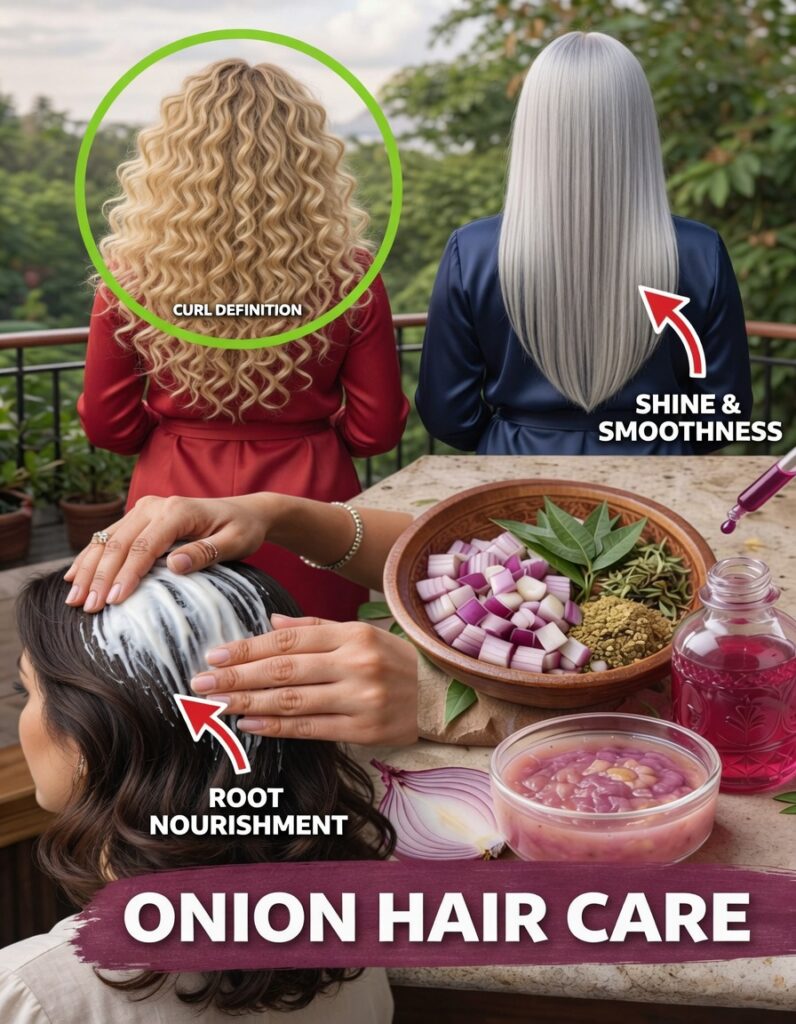
When Your Hair Starts to Feel “Off,” Look at Your Scalp First
Hair rarely changes in a single day. Yet at some point, you catch your reflection and notice it: strands look thinner, roots go limp faster, and shine seems to disappear. You rotate shampoos, add a mask, even try an expensive treatment—only to feel good for a week before the heaviness and dullness return.
A common blind spot is that the problem may not be your next product. It may be your scalp care routine. For many people, a surprisingly simple habit—like using onion water for scalp care—becomes a reset that changes how hair feels over time.
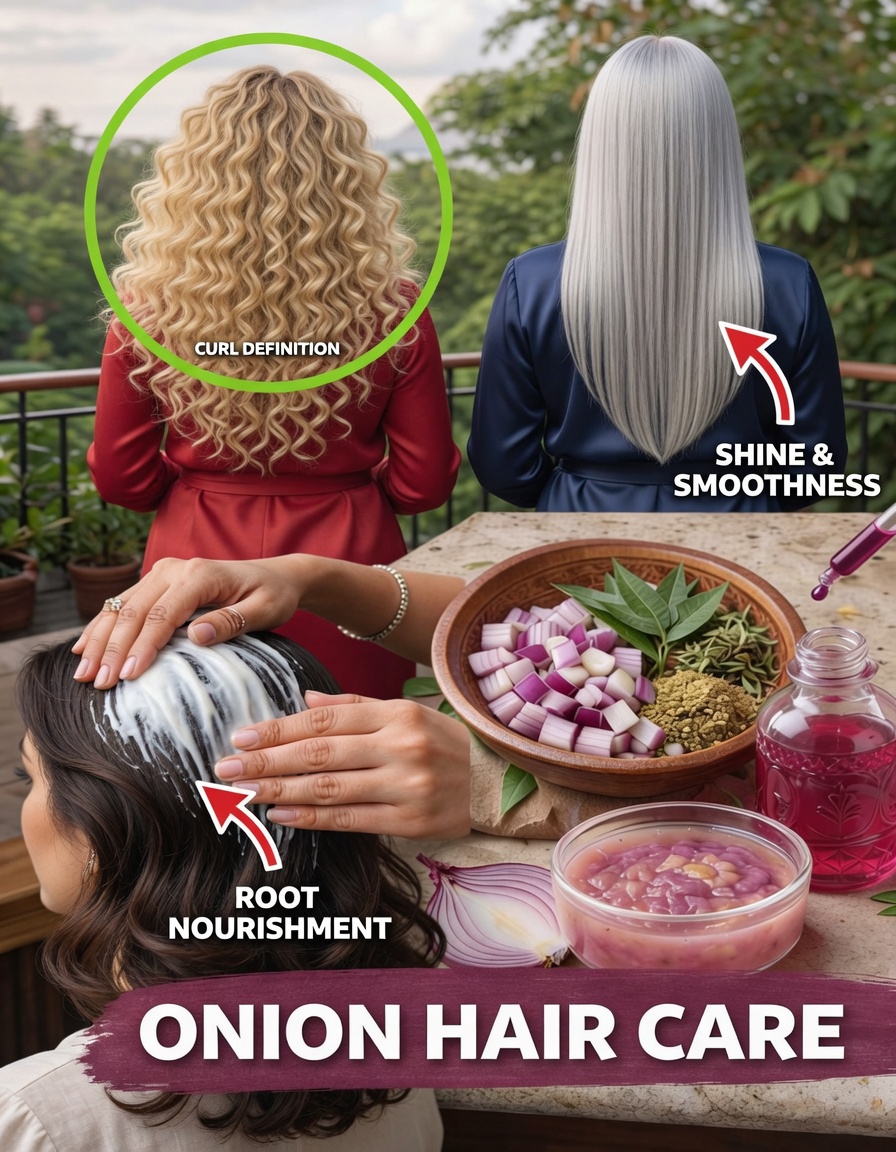
Why Scalp Health Matters More Than Most People Think
Hair doesn’t “begin” at the ends. It starts at the scalp, where skin condition, oil balance, residue buildup, and tension all influence how your hair looks and behaves.
As the years go by, many people notice subtle shifts such as:
- Roots getting oily by midday
- A scalp that feels dry, tight, or uncomfortable
- More noticeable shedding in the shower
- Itchiness after styling products
A simple reality: when your scalp feels unbalanced, your hair often looks unbalanced too.
Dermatology research frequently highlights the connection between scalp condition and how hair fibers perform—impacting shine, volume, and manageability. Onion water is not a medical treatment, but some people include it in routines aimed at improving scalp comfort and cleanliness.
And there’s more to it than ingredients alone.
Why Onion Water Became a Traditional Hair Habit
In many cultures, onion juice has been part of home beauty traditions for generations. The interest comes from what onions naturally contain:
- Sulfur-containing compounds
- Antioxidants
Some lab findings suggest sulfur may relate to keratin structure, and keratin is a primary protein in hair. That does not mean onion water guarantees growth or thickness. However, the routine often includes consistent scalp massage, careful rinsing, and more mindful care—factors that may support a fresher scalp environment.
The key insight: for many users, the benefit is as much about the ritual as it is about the onion.

The Countdown: 9 Potential Benefits of Onion Water for the Scalp (Realistic and Responsible)
Below are common experiences people report when using onion water as part of a steady routine. Individual results vary, and comfort should always come first.
9) A Fast “Fresh Scalp” Sensation
Many users describe an immediate awake, cooling feeling after rinsing. When properly diluted and tolerated, it should not burn—more like the relief of fresh air after a stuffy room.
8) Roots That Feel Less Coated
Product residue from hairspray, dry shampoo, and excess oil can make hair feel heavy. With gentle massage and thorough rinsing, some people notice:
- Lighter-feeling roots
- A scalp that feels less congested
- Hair that sits differently at the base
This isn’t a medicated cleanser, but it may function as a simple “reset” for some routines.
7) A Helpful Addition to Oily Scalp Routines
Overwashing can trigger rebound oiliness. Some people find that using onion water 1–2 times per week, alongside gentler shampooing, helps them avoid aggressive cleansing.
The improvement may come from:
- More intentional scalp massage
- Better rinsing habits
- Less constant switching between products
Consistency often matters more than intensity.
6) A “Fuller Look” Effect (For Some)
Onion water does not promise new hair growth. Still, when the scalp feels cleaner and less irritated, hair may appear:
- Less flat
- More lifted at the roots
- Less weighed down
Sometimes the change is not “more hair,” but better behavior from the hair you already have.
5) Turning Hair Care into Actual Self-Care
This is an underrated benefit. You have to prepare it, apply it, wait, and rinse—steps that slow you down.
Stress can influence shedding patterns over time. Onion water itself is not a stress remedy, but a calming routine may support healthier habits overall.
4) The Strong Smell as a Sensory Reset
Onion scent is sharp—no denying it. But strong sensory cues can feel energizing, similar to peppermint or eucalyptus.
Helpful tips:
- Rinse extremely well
- Shampoo after treatment
- Apply conditioner to mid-lengths and ends only (not the scalp)
Some people add a little lemon juice, but citrus can irritate sensitive scalps—use caution.
3) Less “Product Hopping,” More Observation
Many people chase the next miracle solution. Onion water is simple, low-cost, and repeatable, which encourages consistency. With fewer variables, it becomes easier to identify:
- What triggers irritation
- What calms your scalp
- How often washing truly helps
2) A Confidence Boost from Being Proactive
When you actively care for your scalp, you feel more in control. That mindset can change how you:
- Style your hair
- React to shedding
- Manage everyday hair frustrations
Confidence comes from participation, not perfection.
1) A Better Relationship with Your Scalp
This may be the biggest shift. Regular scalp massage can temporarily increase circulation and encourage relaxation. More importantly, it creates a habit of attention: you stop ignoring your scalp and start caring for it.
Now let’s make the routine practical.

How to Make Onion Water at Home (Step by Step)
What You’ll Need
- 1 fresh onion
- Blender or grater
- Strainer or cheesecloth
- Bowl or applicator bottle
- Warm water
Instructions
- Wash and peel the onion.
- Blend or grate to release the juice.
- Strain well to remove pulp (this helps with rinsing and smell).
- Apply the liquid to the scalp only, not the hair lengths.
- Massage gently for 3–5 minutes.
- Leave it on for 20–30 minutes.
- Rinse with warm water.
- Shampoo as usual.
Simple, repeatable, and easy to track.
Quick Comparison: What Each Part of the Routine Feels Like
- Onion water: supports a refreshed-scalp ritual; often feels cooling, sharp, “clean”
- Scalp massage: promotes relaxation and temporary circulation; often feels looser, lighter
- Warm rinse: helps remove residue; often leaves a softer, calmer finish
Safety and Smart Use Guidelines
- Frequency: 1–3 times per week
- Time limit: 20–30 minutes maximum
- Patch test: try a small area first
- Stop immediately if: burning, rash, worsening irritation
- Dilution: add water if it feels too strong
- Ask a professional: if you have known scalp conditions or sudden hair loss
Important: If you have eczema, psoriasis, open wounds, or significant shedding concerns, talk to a healthcare professional before trying new scalp treatments.
How to Make the Habit Easier (Without Overcomplicating It)
- Make enough for two uses to save time
- Apply with a cotton pad or small brush to reduce dripping
- Protect shoulders with a towel
- Massage gently—no harsh rubbing
- Rinse thoroughly before shampooing
A helpful mindset: don’t chase dramatic results. Track feedback. Your scalp’s comfort is the best indicator of what’s working.
What People Often Notice After a Month
Many users don’t say, “My hair changed overnight.” More commonly, they report:
- “My scalp feels cleaner.”
- “My routine feels calmer.”
- “I feel more in control.”
That quieter improvement is often more sustainable than big promises.
Conclusion: A Small Routine That Can Create a Noticeable Shift
Onion water isn’t a guaranteed solution. It’s a home ritual that may support scalp freshness and comfort when used carefully and consistently.
One onion. About twenty minutes. A routine you can repeat—often the most powerful factor in how your hair feels over time.
Frequently Asked Questions
1) How soon can I notice changes?
Many people feel a refreshed scalp sensation immediately after rinsing. Visible changes in hair behavior, if they happen, usually require several weeks of consistent use.
2) Will onion water make my hair grow faster?
There is no strong clinical evidence that onion water reliably guarantees faster hair growth. Some limited research suggests possible benefits, but outcomes vary widely.
3) How can I reduce the onion smell?
Rinse thoroughly, shampoo after treatment, and keep conditioner on the lengths only. Some add a few drops of lemon juice, but patch test first if your skin is sensitive.
Disclaimer: This article is for informational purposes only and is not a substitute for professional medical advice, diagnosis, or treatment.