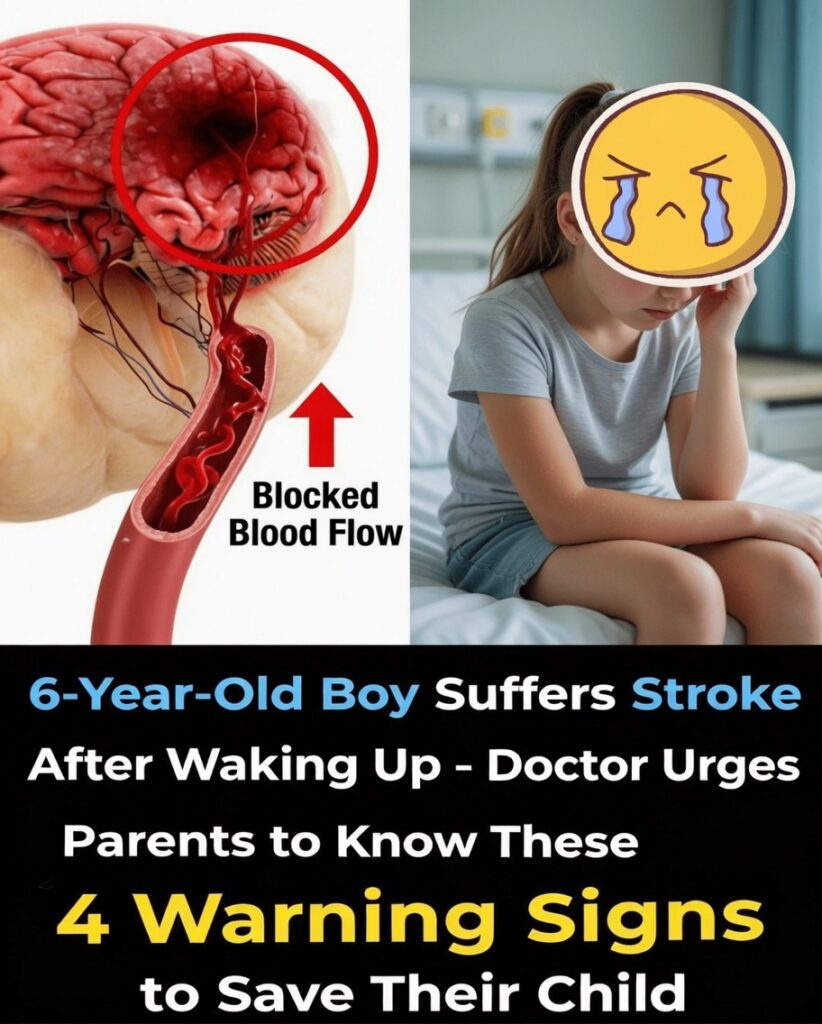
When a Child Has a Stroke: Early Signs Parents Should Never Ignore
Waking up and realizing your child can’t move one side of their body—or is suddenly speaking in a strange, confusing way—is terrifying. Although strokes in children are uncommon, they do happen, and they often unfold with little warning. In some cases, symptoms appear right after a child wakes up, leaving families with a very small window to act.
That reality became painfully clear for one family when a 6-year-old boy had a stroke shortly after getting out of bed—a reminder of how quickly life can change in the morning hours. Guidance and research shared by organizations such as Johns Hopkins Medicine and the American Stroke Association consistently point to one key message: spotting the early warning signs can dramatically affect outcomes. The challenge is that many parents miss subtle clues simply because they don’t expect stroke symptoms in kids.
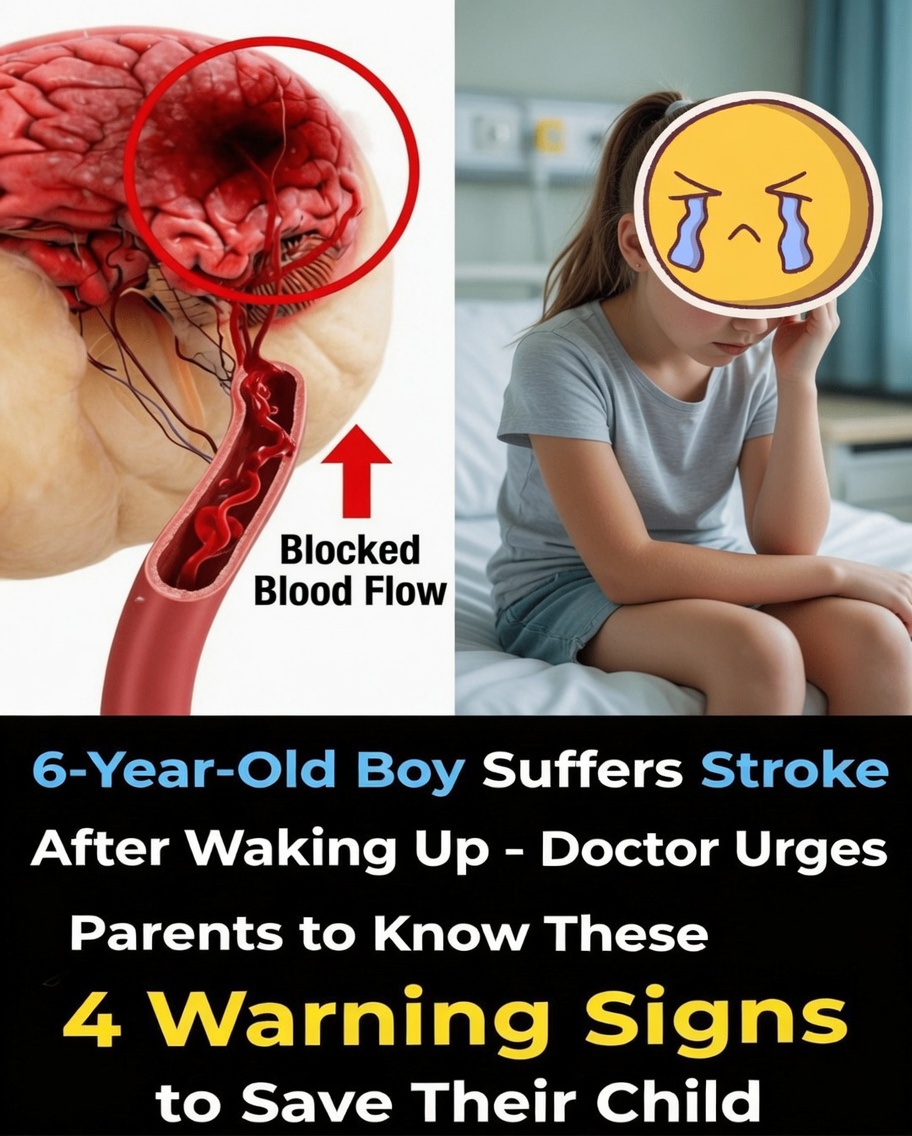
Pediatric Stroke Basics: What It Is and Why It Can Happen Suddenly
A stroke occurs when blood flow to part of the brain is disrupted, either because of a clot (ischemic stroke) or bleeding (hemorrhagic stroke). In adults, stroke risk is often connected to lifestyle and age. In children, the causes are different—and sometimes unclear.
Common contributors can include:
- Congenital heart conditions
- Infections
- Blood-clotting or blood-cell disorders
- Vessel abnormalities
- Unknown causes (studies suggest around one-third of pediatric strokes have no clearly identified trigger)
What makes childhood stroke symptoms especially difficult to recognize is that they can resemble more familiar problems, such as migraines, ear infections, or general illness. Still, the American Heart Association and other pediatric experts emphasize that many stroke warning signs in children look similar to those in adults—along with a few child-specific red flags.
One helpful tool is the F.A.S.T. method, originally designed for adults but widely used to guide families in recognizing stroke symptoms quickly.
The 4 Most Important Stroke Warning Signs in Children
Specialists from institutions such as Cincinnati Children’s Hospital and the American Stroke Association highlight several patterns seen often in school-age children. If any of the symptoms below appear suddenly, treat it as an emergency and call emergency services immediately.

1) Sudden weakness or numbness (especially on one side)
This is one of the most common and recognizable signs. A child may:
- Struggle to lift an arm
- Drag a leg or complain it feels “heavy”
- Show one-sided facial drooping, especially noticeable when smiling
In the case of the 6-year-old boy who had a stroke after waking, one-sided weakness was a major clue that led to urgent medical care.
2) Trouble speaking or understanding
Language changes can appear abruptly, such as:
- Slurred speech
- Difficulty forming words or sentences
- Confusion when answering simple questions
- Sudden inability to follow basic instructions
Some children may seem unusually quiet, distressed, or frustrated because they can’t communicate normally.
3) Severe headache with vomiting or extreme sleepiness
In children, stroke may present more often with:
- A sudden, intense headache (sometimes described as “the worst ever”)
- Nausea or vomiting
- Unusual drowsiness or difficulty staying awake
This combination should not be dismissed as “just a headache,” especially when it appears out of nowhere.
4) Sudden vision, balance, or coordination problems
A child may suddenly experience:
- Blurred or double vision
- Dizziness or vertigo
- Trouble walking straight
- Loss of balance or coordination
They may stumble, appear unsteady, or say that things “look weird.”
A Quick F.A.S.T.-Style Checklist for Parents
Use these simple checks if you suspect something is wrong:
- Face: Ask your child to smile. Is one side drooping or uneven?
- Arms: Ask them to raise both arms. Does one arm drift downward?
- Speech: Ask them to repeat a short sentence. Is it slurred, unusual, or confusing?
- Time: If you notice even one sign, call emergency services immediately.
Other urgent red flags may include severe headache with vomiting, sudden vision changes, dizziness, or new seizures.

Why Stroke Symptoms After Waking Can Feel So Unexpected
Many families are shocked when symptoms begin first thing in the morning. During the sleep-to-wake transition, the body goes through shifts in blood pressure and circulation, and in rare cases this can contribute to an event in a vulnerable child.
The most difficult part is the emotional impact—fear, disbelief, and helplessness. But knowing what to look for turns panic into action. Recognizing stroke symptoms quickly is not overreacting; it is protecting your child’s brain.
What to Do If You Think Your Child Is Having a Stroke
Fast action can help limit harm. If you suspect a pediatric stroke:
- Stay as calm as possible and check Face, Arms, Speech.
- Call emergency services immediately. Clearly state it may be a pediatric stroke so responders prioritize appropriate transport.
- Write down the time symptoms started (or the last time your child was seen normal). This timing can guide hospital decisions.
- Do not give food, drinks, or medication unless directed by professionals. Focus on safety and preventing falls.
- Share key information with emergency staff:
- Your child’s age
- Recent illnesses or infections
- Current medications
- Known heart or blood conditions
- Relevant family medical history
Hospitals with pediatric stroke protocols may use urgent imaging—often MRI or other scans—to confirm what’s happening and begin treatment quickly.
Can Pediatric Strokes Be Prevented?
Not always. Some childhood strokes are linked to conditions that are difficult to predict or prevent. However, it helps to:
- Keep up with routine pediatric checkups
- Follow specialist care for known risks (such as heart conditions or blood disorders)
- Support overall health through activity, sleep, and balanced nutrition
Even with excellent prevention, the strongest protection is still awareness—knowing the warning signs and acting immediately.
Key Takeaway: Awareness Can Change the Outcome
No parent wants to imagine their child having a stroke. Yet being informed can bring clarity and control in a crisis. The story of the 6-year-old boy who suffered a stroke after waking highlights the urgency of recognizing sudden changes such as:
- One-sided weakness or numbness
- Speech or understanding problems
- Severe headache with vomiting or unusual sleepiness
- Sudden vision, balance, or coordination issues
Trust your instincts. If something feels seriously wrong, seek emergency help right away.
Frequently Asked Questions (FAQ)
Can children really have strokes?
Yes. While rare, pediatric stroke does occur—often cited around 1 in 4,000 children. Causes vary widely, and quick recognition can improve recovery chances.
Are stroke symptoms different in kids than in adults?
Many are similar and can be checked with F.A.S.T. However, children may show seizures, extreme sleepiness, or severe headache more prominently than adults.
What if it isn’t a stroke?
It is still safer to seek emergency evaluation. Medical teams can assess symptoms quickly, and ruling out dangerous conditions is always worthwhile.
Disclaimer
This article is for informational purposes only and does not replace professional medical advice. If you suspect your child may be experiencing stroke symptoms, contact emergency services immediately. Always consult a qualified healthcare provider for personalized guidance. Information in this article reflects insights commonly referenced from the American Stroke Association, Johns Hopkins Medicine, and Cincinnati Children’s Hospital.