No one saw the moment he arrived, which was kind of the point. The street didn’t have eyes anyway—just a thousand quick glances that slid off anything that didn’t scream for attention. Noon traffic shoved forward like it had somewhere better to be, horns cutting the air, delivery scooters squeezing between bumpers, pedestrians spilling out of the crosswalk even after the little red hand started flashing.
But he wasn’t part of that flow. He was a pause.
He stood dead center on the sidewalk seam where the cracked concrete met the shiny new pavers the city bragged about last year. He didn’t crouch by the trash cans like he used to. He didn’t do the thing where he made his shoulders small and his gaze smaller so people could pretend he wasn’t there. Today he stood upright, almost stubbornly, like his bones had finally decided they were done apologizing for existing.
His name was Luca. Most people didn’t know that. They knew “the kid by the pharmacy” or “that boy who hangs near the bus stop” or, if they wanted to be cruel, “one of those.” Luca used to let those names drift past him like exhaust. Today he didn’t let anything drift. He watched.
His eyes stayed locked on the slow crawl of traffic, specifically on a sleek black luxury sedan inching forward as if the city itself was bowing out of its way. The paint was so polished it looked wet, even under the harsh sun. The windows were tinted but not enough to hide what Luca needed to see: the silhouette of a woman in the back seat, posture perfect, chin high, hair pinned like it had never known wind.
He had practiced this moment in his head so many times that the real street felt like a set built for his rehearsal. In his version, he’d be brave immediately. In his version, he wouldn’t shake. In his version, the car would stop exactly where he needed it to, like fate had hired a traffic cop.
Reality didn’t care about his script. His breath hitched anyway. The pulse in his throat pounded like it wanted to climb out and run first. Behind his back his fingers curled around something small and hard, its edges biting into his palm. Not a bucket today. Not a cardboard sign. Not a plea.
Something that could be held up, if not understood.
The car slowed, trapped by a red light and a city bus exhaling in front of it. The driver’s hands stayed on the wheel, expression unreadable behind sunglasses. Luca took one step closer to the curb. Another. The sedan rolled to a stop directly in front of him as if, for once, the universe had decided to hit its mark.
He moved.
Fast, before his courage could change its mind.
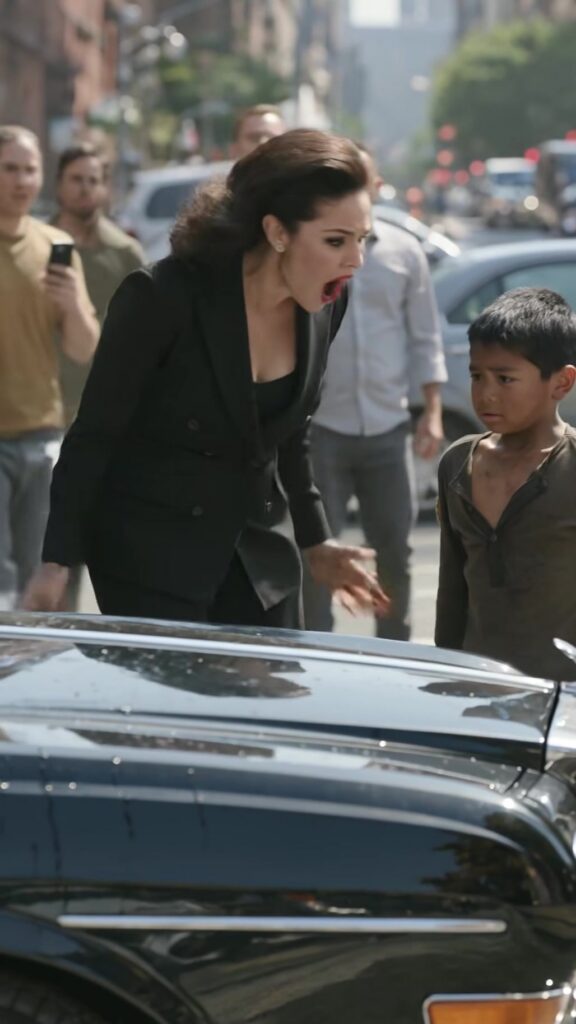
His palm came down hard on the hood. The metallic thud sounded louder than it should’ve, slicing through the noise like someone had turned down the world for half a second. Heads snapped. A couple of people actually gasped, like they’d forgotten street scenes could still surprise them.
Phones appeared the way pigeons appear around bread—sudden, eager, flocking.
The driver stiffened. The sedan’s engine purred like it was annoyed at being interrupted.
For one breathless second nothing happened. Luca almost laughed, because a part of him had expected security guards to pour out of nowhere and throw him into a wall. Another part of him hoped they would, because at least that would mean he didn’t have to speak.
Then the back door unlocked with a soft click that felt obscene in all that chaos.
The door opened.
The woman stepped out. Elegant in a cream coat even though the day was warm, heels that looked like they’d never touched a pothole, a small bag on her arm like an accessory that came with its own warranty. She stood with the calm of someone used to being watched, used to being obeyed, used to exiting cars like the world should hush out of respect.
Luca had seen her before, always through glass, always at a distance—outside the tower where the company logo gleamed like a promise. He’d followed that logo like it was a map back to his life. He’d learned her name from overheard conversations and old news articles: Mara Voss. Founder. Visionary. Philanthropist, according to the billboards. Other words floated around too, quieter ones. Calculating. Untouchable.
Today, the untouchable part looked… cracked.
She didn’t look angry. She didn’t even look annoyed.
She looked nervous.
Her gaze dropped to his hand on the hood, then lifted to his face, like she was sorting him into a category and couldn’t find a label that fit.
“You shouldn’t do that,” the driver warned, stepping halfway out, but Mara lifted a finger and he froze like he’d been paused.
The street held its breath. Even the bus seemed to stop hissing.
Luca brought his other hand forward slowly, like he was drawing a weapon. The crowd leaned in. The phones tilted to frame the reveal. His fingers opened.
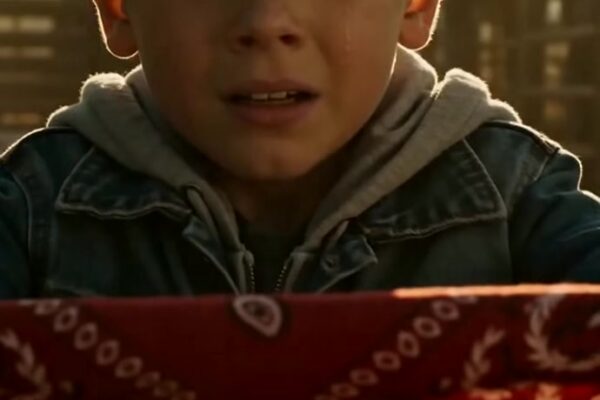
It was a wristwatch, old and worn, the kind that used to be handed down before everything became disposable. The glass was spiderwebbed with cracks. The band was patched with mismatched leather, and the metal casing had rust that looked like dried blood if you squinted.
He held it up between them like evidence in a courtroom.
“Do you remember this?” he asked, voice quiet but steady in a way that surprised even him.
Mara’s face didn’t change much—she was trained for that. But something flickered under the surface, a tiny muscle twitch near her jaw. Her gaze fixed on the watch as if it was a live thing that might leap at her.
“Where did you get that?” she said, and it wasn’t a question you ask when you don’t know. It was a question you ask when you’re afraid of the answer.
Luca swallowed. His mouth tasted like pennies. “This was the last thing my father owned,” he said. “The day he disappeared, someone brought it to our apartment in a plain envelope. No note. Just this.”
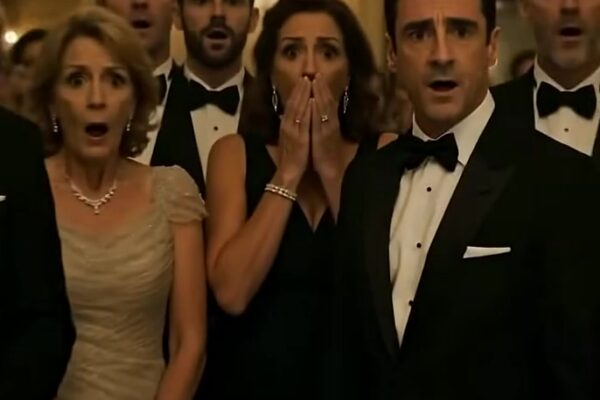
A ripple went through the crowd. Someone whispered, “Disappeared?” Someone else muttered, “Is that the CEO?” Another voice said, too loudly, “This is going viral.”
Luca didn’t look at any of them. He couldn’t. If he did, he’d become a show, and he didn’t come here to perform. He came here to split something open.
“He worked for you,” Luca continued. “Not as a big-shot. Maintenance. Night shifts. Fixing things that nobody notices until they break.” His voice wobbled but he held it together with sheer stubbornness. “And everybody told me the same story. He got fired. He left. He abandoned us.”
Mara’s eyes finally lifted from the watch. They hit Luca’s like a collision. “You don’t know what you’re talking about.”
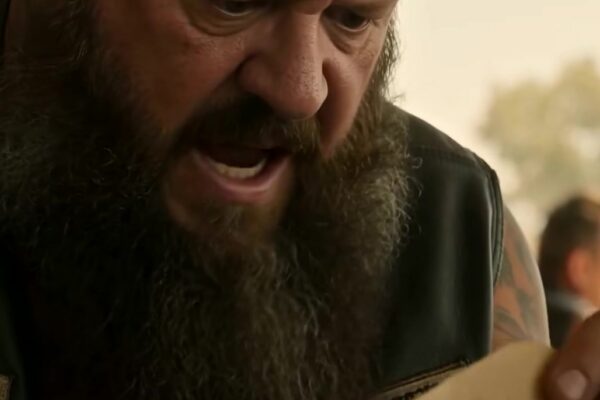
“Then say it,” Luca snapped. The sound of his own anger surprised him; it came out sharp, like glass. “Say what happened. Say why he never came home.”
A siren wailed somewhere far off, then faded. The red light above them changed, but the cars didn’t move because drivers were staring, because people were filming, because a drama had formed its own gravity.
Mara looked around, taking in the ring of cameras, the hungry faces, the city turning into a jury. For a second Luca saw it: her calculations, her mental exits, her usual control. But there was nowhere to go that didn’t look like guilt.
Her shoulders rose and fell with one slow breath. Then she stepped closer, close enough that Luca could smell something clean and expensive on her coat. Close enough that her shadow fell over his shoes.
“I can’t say it out loud,” she murmured, so softly the phones wouldn’t catch it. “Not here.”
Luca leaned in anyway, because his whole body was a magnet for truth.
Her lips came near his ear. The world blurred around them. He could feel the heat of her words before he understood them.
“Your father didn’t disappear,” she whispered. “He traded.”
Luca blinked. “What?”
“He wanted you safe,” Mara breathed, and her voice frayed at the edges like she was holding back something sharp. “He took the offer. He signed the papers. A new name, a new city. One condition: you never look for him. You never connect him back to us. He chose it.”
The sentence landed like a punch delivered in slow motion. Luca felt his stomach drop, like an elevator cut loose. The street noise rushed back in too loud, too bright.
“No,” he said, but it wasn’t loud enough to count as a denial. It was just a sound you make when your brain is trying to reject reality.
Mara’s mouth tightened. “He thought you’d be angry. He told us you’d be better off thinking he was gone than knowing he left.”
Luca’s fingers went numb. The watch suddenly weighed a thousand pounds. For years it had been proof of a crime, a relic he could cling to. If what she said was true, it wasn’t evidence. It was a souvenir of a choice.
His grip loosened without permission.
The watch slipped from his hand, tumbling in a small arc, catching a flash of sunlight on its cracked face. It hit the pavement with a brittle smack. The glass finally gave up, shattering into glittering fragments that skittered into the seams of the sidewalk.
Luca stared at the pieces as if they could reassemble into a different ending.
He didn’t cry. That surprised him too. Maybe he’d used up all his tears on nights when nobody was watching. Maybe anger had taken up all the space grief used to live in.
The crowd surged closer, voices overlapping. “What did she say?” “Did she admit something?” “Is that his dad’s watch?” “Get her face!” “This is insane!”
Mara stepped back, pale now, her elegance suddenly looking like a costume that didn’t fit. For the first time she seemed smaller than her car, smaller than the cameras, smaller than the story curling around her like smoke.
Luca didn’t give them the payoff. He didn’t raise his voice, didn’t point, didn’t declare her guilty. He just looked once more at the broken watch—at time, cracked open—then turned away.
He walked through the ring of people, and they parted because something in his face told them not to touch him. He walked past the trash can he used to sort through, past the bus stop where he’d slept under the bench on rainy nights, past the pharmacy window that reflected him as a ghost.
Behind him, the crowd kept shouting. The phones kept recording. Mara stood by the open car door like she’d forgotten how to get back inside her own life.
No one saw the moment he arrived. But everybody saw him leave, and somehow that was worse—because now they couldn’t pretend he hadn’t been real the whole time.
And Luca, walking away with empty hands, understood the cruelest part: the truth wasn’t a weapon after all. It was a key. And he wasn’t sure he wanted to know what door it opened.