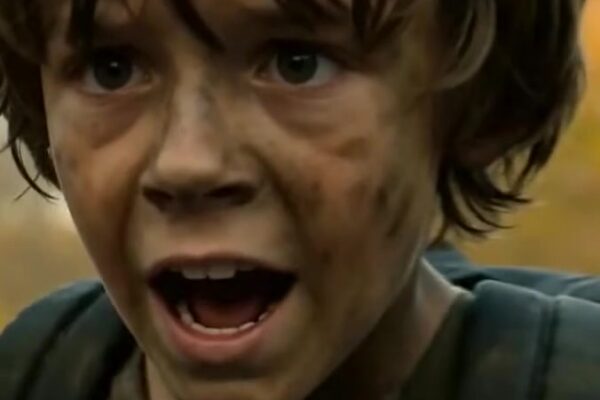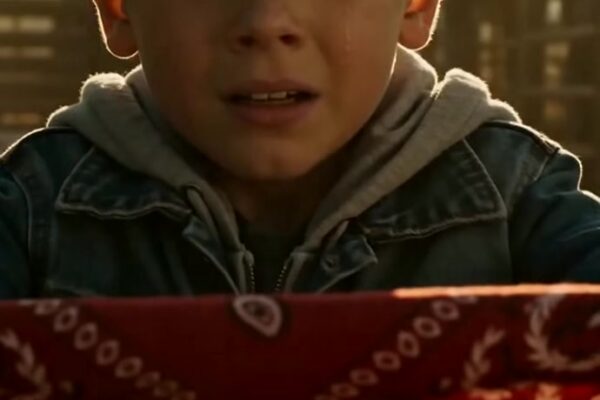
The boy was crying too hard to speak. Not the quiet kind of crying, either—the kind that fogged his whole face and made his hoodie dark around the collar, like he’d been caught in rain. He sat jammed into the corner of a diner booth as if he could wedge himself into the vinyl seam and vanish. His hands—small, pale, knuckles rubbed raw—clutched the leather sleeve of the man beside him with an intensity that didn’t match his size.
The man looked like trouble the way old movies did it: heavy shoulders, broken nose, and scars that ran across his cheek and into his beard line like someone had carved a map there and never bothered to erase it. The waitress kept drifting by their table without making eye contact, pretending to wipe crumbs that weren’t there. Two truckers at the counter had turned their coffee cups into mirrors, watching the booth without seeming to.
“Kid,” the man said softly, like he was talking to a skittish animal. “Breathe.”
The boy tried. It came out in jerks. Every time the door moved—every time the bell over it gave that cheap little jingle—his whole body flinched and he pressed his face harder into the man’s coat. It wasn’t affection. It was survival.
Outside, daylight sat thin and cold on the parking lot. The diner was one of those places that looked like it had been glued to the highway in 1978 and no one had checked if the glue was still holding. The sign buzzed. The coffee tasted like the pot had secrets. The man knew the place. He’d come here when he needed anonymity and a booth with his back to the wall.
He’d been doing fine with anonymity until the kid had appeared at his truck door twenty minutes ago and asked, without words, to be let in. The boy had climbed into the passenger seat like he’d done it a thousand times, shaking so hard the seatbelt rattled. The man had started to ask questions, then changed his mind and drove straight to the diner because it was lit and there were people and sometimes that was the difference between safe and not safe.
Now the kid’s grip tightened like the world was trying to pull him away.
The man’s phone buzzed once on the table. He didn’t look at it. He watched the glass doors instead, the way a dog watched a gate. His fingers rested near his coffee cup, too calm. The calm was the scariest part.
Across the room, a woman with a cardigan and a worried face whispered to her friend, “Should we call someone?”
“Call who?” her friend whispered back. “Batman?”
The man’s mouth twitched without becoming a smile.
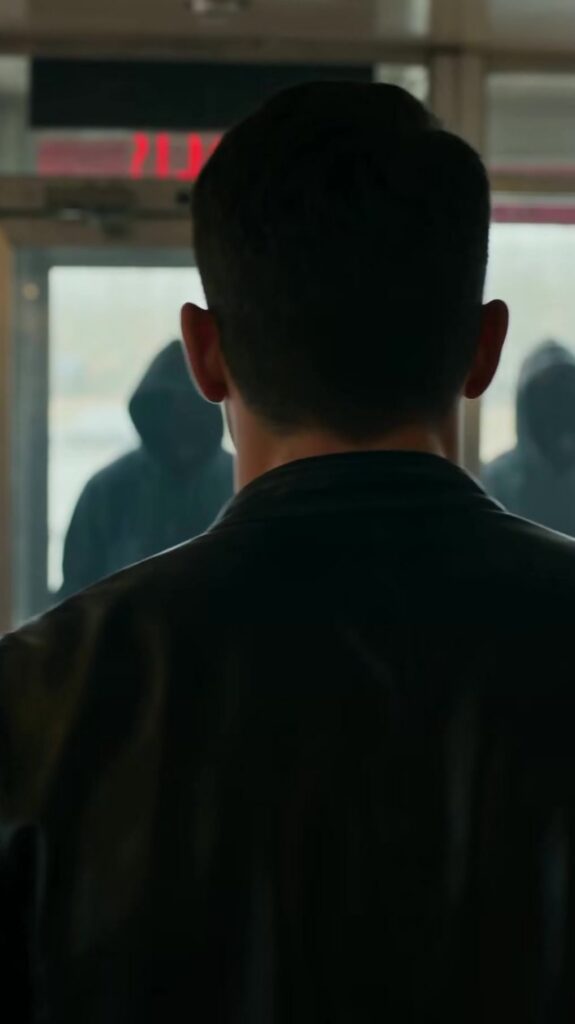
The bell above the door rang again—just a single bright ping—and two hooded figures appeared in the doorway, framed by the gray light outside. They paused long enough to scan the room. Their heads moved in a practiced way, left to right, like they were checking inventory.
The boy made a tiny broken sound, not even a sob, more like the noise a kettle makes right before it screams. He shoved his face into the man’s coat so hard the man felt wet warmth through the fabric.
“Hey,” the man murmured, low enough that only the boy could hear. “Stay behind me.”
The boy didn’t nod. He couldn’t. He just curled closer, fingers tangling in the leather sleeve as if the sleeve was a rope above deep water.
The hooded figures stepped inside. The bell rang again. It wasn’t loud, but every head in the diner turned because fear is an excellent conductor of sound. The pair were dressed similarly—dark hoodies, baseball caps under the hoods, hands tucked in pockets. Their shoes were too clean for the wet pavement outside.
The man stood. His chair scraped the floor in a rough, ugly sound that snapped the room’s attention to him. He didn’t rush. He didn’t puff up. He just rose like a door closing.
The boy slid off the booth and ducked behind the man’s leg, pressing his cheek to denim. The man felt the tremor traveling through the kid like a small engine running too fast.
One of the hooded figures stopped a few steps from the table and tilted his head. Even with the hood up, his confidence was obvious, like he thought the world belonged to him and had simply misplaced the deed.
“There you are,” the figure said, voice light, like they were looking for a lost dog. “Buddy. You had everyone worried.”
The boy’s hands tightened. He finally managed words, thin and shredded. He whispered into the man’s sleeve, “They said they’ll take me back.”
Something in the man’s face changed. Not anger first. Not violence. Recognition, like a key turning in a lock he’d sworn was sealed.
He lowered his gaze to the boy. “What did they call you?”
The boy’s lips trembled. He swallowed hard, as if the name itself hurt to release. “Leo.”
The man went very still. The diner, somehow, went still with him. Even the cook behind the pass window paused with a spatula midair.
“Leo,” the man repeated, not as a question. His throat worked like he’d bitten down on a memory. “That was my son’s name.”
The hooded figure gave a short laugh that didn’t reach any warmth. “Cute story. Now hand him over.”
The man didn’t look at them right away. He stared at the top of the boy’s head. The kid’s hair was light brown, cut uneven like someone had done it in a hurry. There was a faint bruise near the hairline, half hidden.
“Where’d you get him?” the man asked.
“Found him,” the other hooded figure said. This one had a sharper voice, impatient. “He belongs with us.”
“Nobody belongs with you,” the man said, finally lifting his eyes.
The first figure shifted his weight, hand still in his pocket. “Look, man. Don’t make this complicated. You don’t even know the kid.”
The man’s gaze flicked to the woman in the cardigan. She’d pulled out her phone, trying to pretend she was checking messages while her hands shook. The man gave her the smallest nod. Not permission. A request. The woman blinked, understood, and turned away like she was scrolling, thumb moving fast.
“I know enough,” the man said. “I know that he ran to a stranger instead of going back to you.”
The hooded figure’s voice sharpened. “You think you’re a hero?”
“No,” the man said. “I’m just familiar with regret.”
The word hung there, heavier than it should’ve been. The boy pressed closer. The man could feel him listening, as if the answer might change whether the world kept spinning.
“My son disappeared eight years ago,” the man said, quiet but clear, so the whole room heard it even if they didn’t mean to. “Same name. Same age he would’ve been. Same look in his eyes like he’s apologizing for taking up space.”
The hooded figures exchanged a glance. It was fast. Too fast. The kind of glance that admitted information existed.
The man saw it and something inside him settled into place like a weapon being assembled. “So here’s what’s going to happen,” he said. “You’re going to walk out. Right now. And you’re going to forget what booth you saw him in.”
The first figure snorted. “And if we don’t?”
The man didn’t lift his fists. He didn’t step forward. He simply reached into his jacket and pulled out an old, creased photograph, held together at the corners with tape. He slid it across the table toward them.
The photo showed a little boy on a swing set, laughing so hard his eyes were closed. A smaller, younger version of the man stood behind him, hands on the chains, smiling like he hadn’t yet learned how life collected payments.
“This is my Leo,” the man said. “Or it was. And if you’ve got anything to do with what happened to him—if you’ve used that name like a leash on another kid—then you’ve just walked into the wrong diner on the wrong day.”
The hooded figure didn’t pick up the photo. He stared at it like it might bite.
Behind the counter, the cook quietly reached down and pressed something. The bell above the door didn’t ring, but outside, somewhere, a siren started in the distance, growing louder by the second. Someone had made the call.
The second hooded figure muttered, “We don’t have time for this.”
The first one’s gaze shifted past the man, trying to catch a glimpse of the boy behind him. The man moved half an inch, blocking the line of sight without even looking like he’d moved.
“He’s coming with us,” the figure insisted, but the confidence was thinning now, like cheap paint in rain.
The boy whispered again, voice barely there. “They… they make you do things.”
The man’s jaw clenched. “I know,” he said, though he didn’t. Not exactly. But he knew what it was to be owned by someone else’s choices.
The siren grew closer. The diner’s air changed, charged with that strange relief that comes when danger realizes it might not get away clean.
The first hooded figure took a step back. “This isn’t over,” he said, like a line he’d practiced.
“It is for today,” the man replied.
They backed toward the door, not wanting to turn their backs, then slipped outside into the pale daylight. The bell gave its little ring as they left, cheerful and oblivious.
The man waited until they were gone from the glass, until the parking lot held only cars and wet pavement. Then he knelt beside the boy, lowering himself so their faces were level.
Up close, the kid’s eyes were the color of old pennies. There was fear there, yes, but also something stubborn, something that had refused to go out.
“Hey, Leo,” the man said gently, like he was testing the name for honesty. “I’m Mason.”
The boy’s breathing hitched. “Are you… are you gonna send me back?”
“No,” Mason said. The word came out solid, like he could build a house with it. “Nobody’s taking you anywhere you don’t want to go.”
Outside, the sirens arrived, and the diner filled with movement and voices and the rustle of people finally letting themselves exhale. But in the booth’s shadow, the boy kept both hands wrapped around Mason’s sleeve as if it was the only real thing left.
Mason covered the boy’s hands with his own—scarred, calloused, careful—and felt a strange, impossible thought bloom in his chest.
Maybe the world didn’t give back what it took.
But maybe, sometimes, it sent something that looked like it, trembling and alive, into a booth in a forgotten diner, and dared you to do better this time.