Do your hips feel tight or your lower back feel stiff after long hours at a desk or on the couch? You’re not alone. Extended sitting, daily stress, and the pace of modern life often create built-up tension that makes simple movement feel harder—and leaves you worn out by day’s end. The encouraging part is that a gentle yoga posture called Happy Baby Pose (Ananda Balasana) can help relieve these common discomforts with very little time or effort.
Keep reading for a clear, beginner-friendly guide—plus the reasons many people notice benefits even after a short hold.
What Is Happy Baby Pose (Ananda Balasana)?
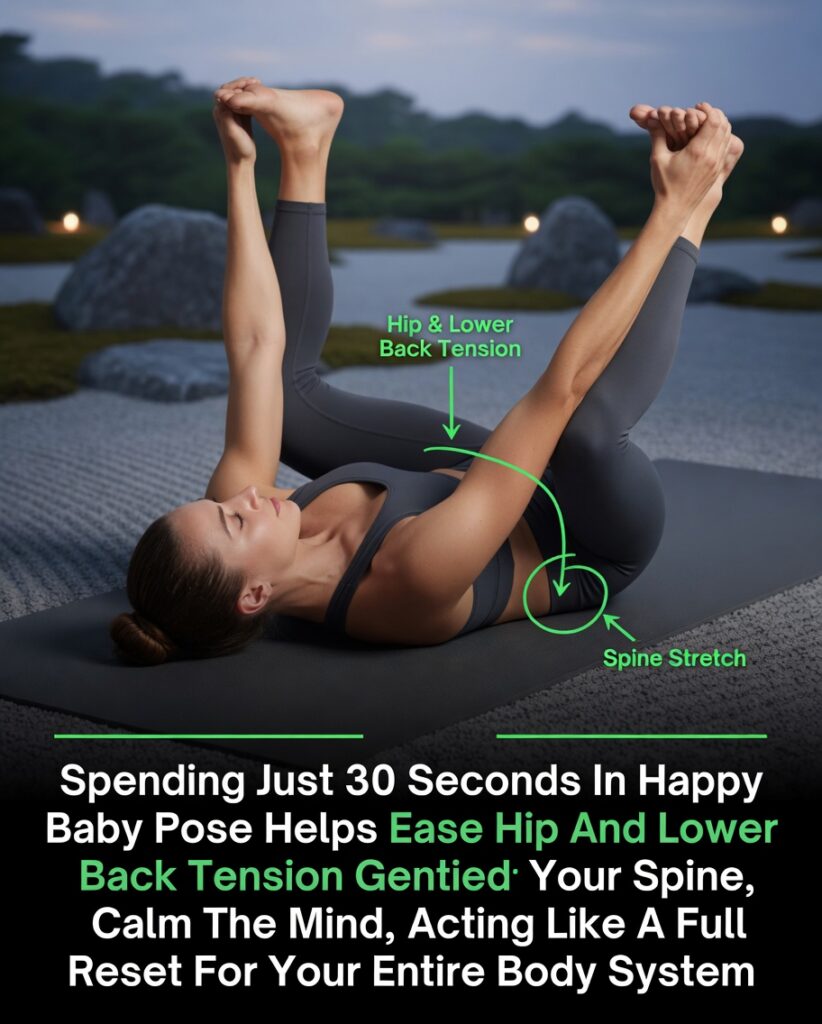
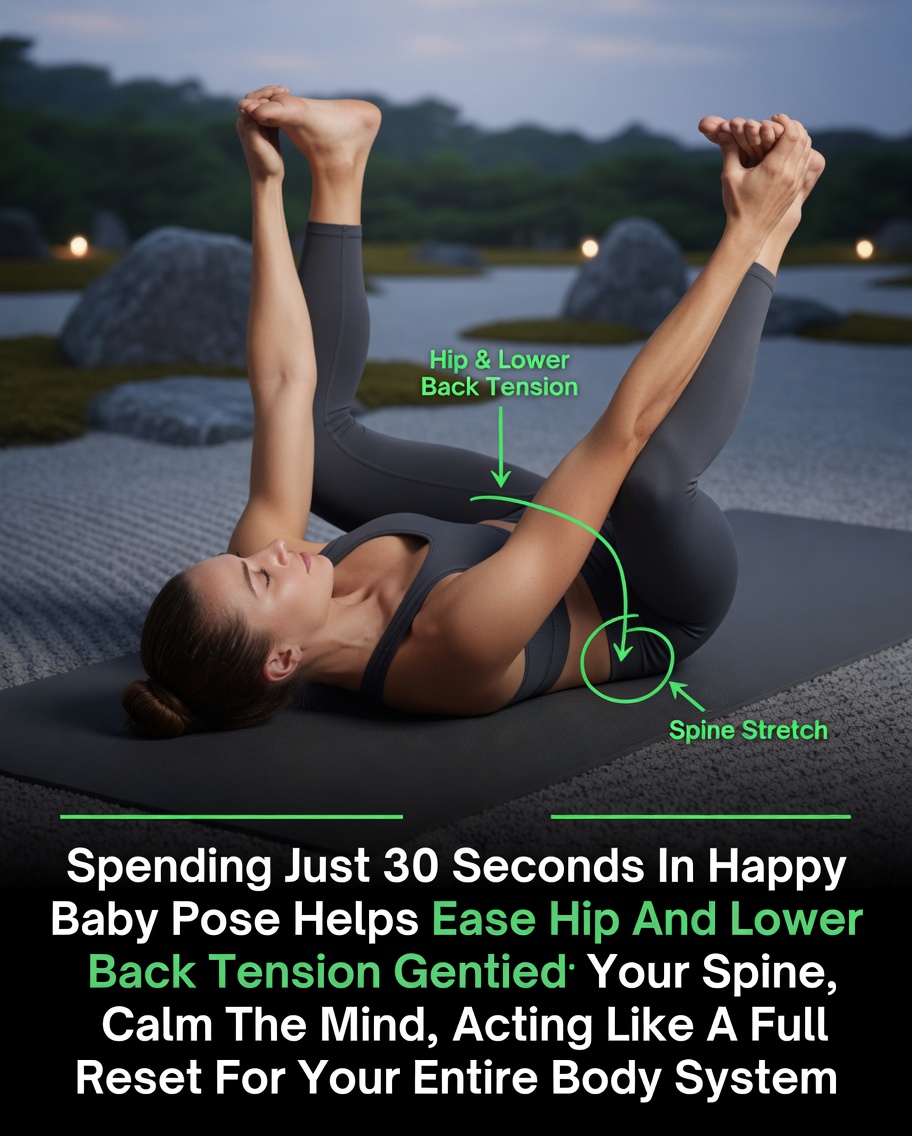
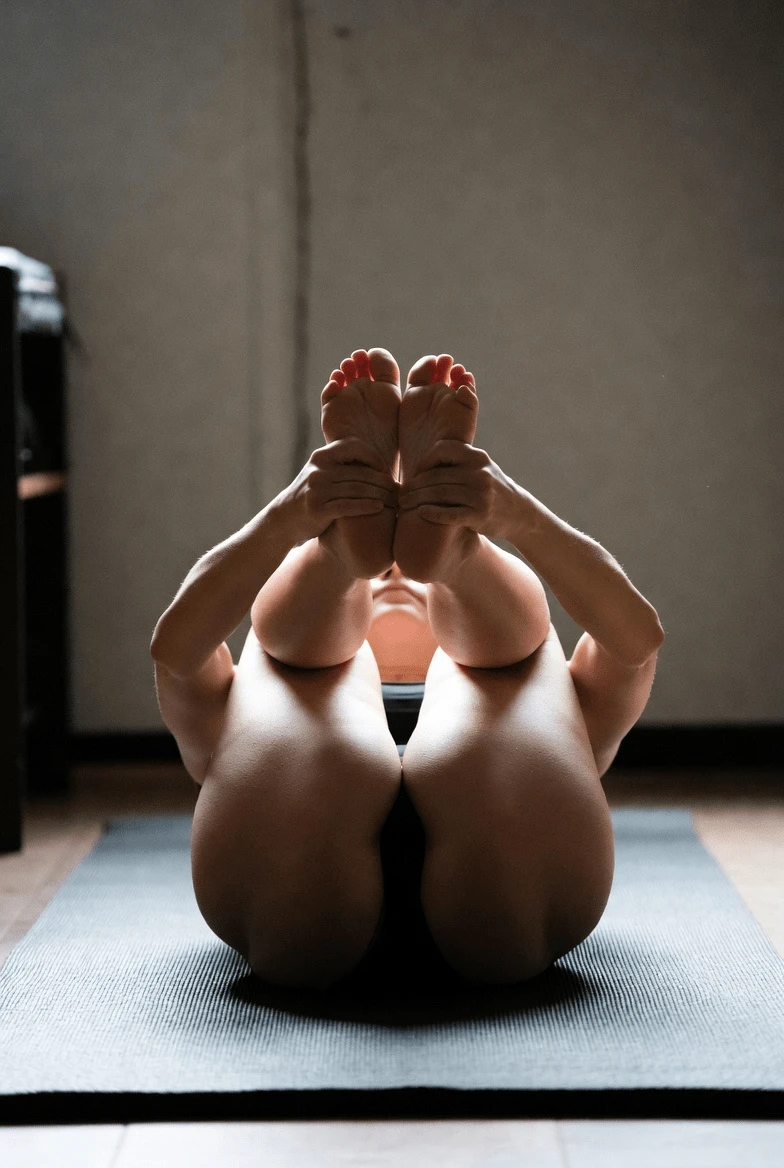
Happy Baby Pose is a restorative yoga position performed on your back. You bend your knees toward your chest, hold your feet (or ankles), and softly open the hips. The shape resembles the relaxed, playful posture babies naturally take—hence the name.
Because it’s supported by the floor and doesn’t require advanced strength, it’s an accessible stretch for many bodies, especially when modified.
Physical Benefits of Holding Happy Baby Pose for 30 Seconds
Even a brief time in Happy Baby Pose can help release tension in areas that commonly get tight from sitting. While direct research on this exact pose is limited, broader yoga research on restorative and hip-opening postures suggests improvements in mobility, flexibility, and perceived stiffness for many people.
Key potential benefits include:
- Hip and inner-thigh opening: Prolonged sitting can shorten the hip flexors and tighten the groin and inner thighs. This pose gently targets the hips, adductors, and hamstrings, supporting a more comfortable range of motion.
- Lower back relief: With your back supported by the floor, the spine can decompress naturally. Light rocking may also create a soothing, massage-like sensation through the low back.
- Posture and alignment support: By encouraging a longer spine and relaxed pelvis, Happy Baby Pose may complement posture-focused habits over time—especially when practiced consistently.
Research on yoga for hip and back comfort often points to reduced muscle tightness and improved day-to-day movement quality, particularly when gentle poses are practiced regularly.
How Happy Baby Pose Helps Calm the Mind
Happy Baby Pose isn’t only about stretching. When you settle into the position and breathe slowly, it can encourage the parasympathetic nervous system—often described as the “rest and digest” response—which counterbalances stress and overactivity.
Many people report feeling more grounded after even a short hold. Studies on yoga and breath-centered movement frequently associate practice with:
- lower perceived stress
- improved relaxation
- fewer racing thoughts and better emotional regulation
This combination—physical release plus nervous-system downshifting—is why Happy Baby Pose works well as a quick reset during a busy day.
Step-by-Step: How to Do Happy Baby Pose Safely
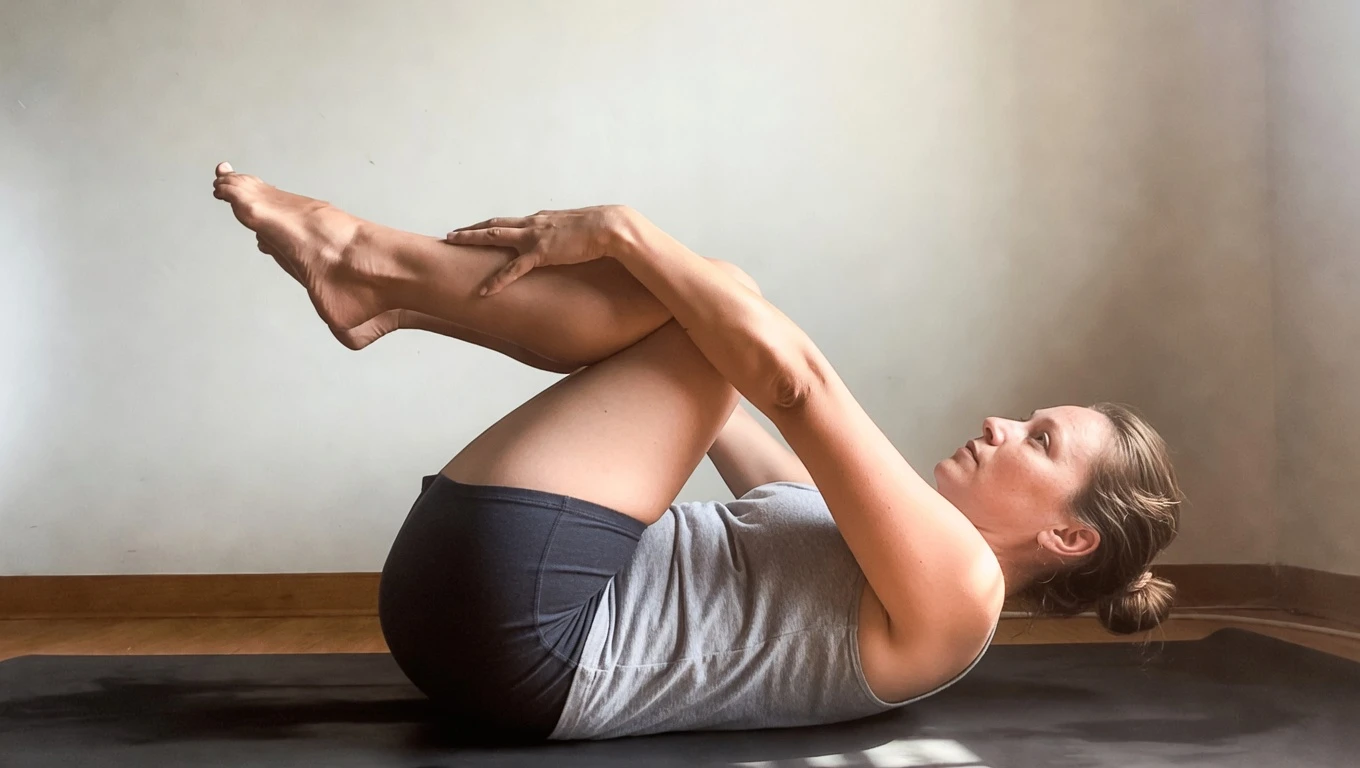
Follow these steps to practice Happy Baby Pose with good form:
- Lie on your back on a yoga mat or a comfortable surface, legs extended.
- Bend both knees and draw them toward your chest, keeping the tailbone heavy on the floor.
- Thread your arms inside your knees and hold:
- the outer edges of your feet, or
- your ankles if that’s more accessible.
- If reaching is difficult, use a yoga strap or towel looped around the soles.
- Open your knees wider than your torso, guiding them toward your armpits while keeping your shins close to vertical.
- Create a gentle, balanced action:
- press feet up into your hands, and
- draw knees down lightly (never forcing).
- Optional: rock side to side slowly for a soothing spinal massage.
- Breathe slowly and deeply—inhale to feel length, exhale to soften tension.
- Hold for 30 seconds to a few minutes, then exit by hugging knees to chest before extending the legs.
If you’re new, start with shorter holds and prioritize comfort over depth.
Quick Tips to Get More Out of Happy Baby Pose
- Modify for comfort: If your lower back lifts off the floor, try keeping your hands on your thighs or shins instead of your feet, or add gentle support under the head.
- Use movement intentionally: Small side-to-side rocking can increase comfort and circulation.
- Slow your exhales: Longer exhalations often help the body relax more fully.
- Practice consistently: Even 30 seconds daily—before bed or during a work break—can add up over time.
- Pair it with recovery poses: Follow with Child’s Pose or Legs-Up-the-Wall for an even more restorative sequence.
Common Variations (So It Works for Your Body)
Happy Baby Pose can be adjusted for flexibility, comfort, or specific needs:
- Supported Happy Baby (with strap): Loop a strap around each foot (or one strap across both) to reduce strain and make the hold easier.
- Half Happy Baby (one leg at a time): Hold one foot while extending the other leg along the floor—often helpful for tight hips or beginners.
- Props for extra support: Placing a bolster or folded blanket under the pelvis/sacrum can add comfort and encourage gentle hip opening.
These options make the pose accessible to a wide range of bodies and mobility levels.
What Science Suggests About Restorative Yoga Poses Like This
Although studies specifically isolating Happy Baby Pose are scarce, broader evidence on gentle and restorative yoga indicates potential benefits such as:
- Reduced stress and anxiety, especially with consistent practice
- Improved mobility and reduced discomfort in the hips and lower back in many participants
- Better overall well-being in therapeutic yoga programs that include hip- and pelvis-focused postures
For best outcomes, combine yoga with supportive habits like regular movement breaks, sleep, hydration, and strength work appropriate to your needs.
Add Happy Baby Pose to Your Day (Starting Today)
Happy Baby Pose is a simple, no-equipment practice that can help you feel more open through the hips, more comfortable in the lower back, and calmer mentally. Try 30 seconds and observe what shifts—many people end up using it as their go-to “reset” pose during breaks or before sleep.
FAQ
How long should I hold Happy Baby Pose?
A practical range is 30 seconds to 2 minutes. Begin with a short hold and increase gradually as your body feels more comfortable.
Is Happy Baby Pose beginner-friendly?
Yes. It’s generally gentle and highly modifiable. If you have hip, knee, or back concerns, check with a healthcare professional before starting new movements.
Can I practice Happy Baby Pose every day?
Often, yes. Daily short holds are common in gentle yoga routines—as long as the pose feels good and causes no pain.
Disclaimer
This article is for informational purposes only and does not provide medical advice. Happy Baby Pose and other yoga practices may support general wellness but are not a substitute for professional medical care. Consult your doctor or a qualified yoga instructor before beginning any new exercise, especially if you have injuries, pre-existing conditions, or health concerns. Results vary by individual—always listen to your body and avoid forcing a stretch.