The sign above the automatic doors flickered like a warning: LARKIN’S PHARMACY—OPEN 24 HOURS. The town had been shrinking for years, but the pharmacy stayed lit, a stubborn island of fluorescent light and humming refrigerators. At 2:17 a.m., Mara Doyle parked crookedly and sat with her forehead against the steering wheel, listening to the engine tick down and her own pulse tick up.
On the passenger seat, a folded program from the funeral home held a photo of her mother from another era—smooth skin, bright eyes, the kind of face that looked like it belonged to someone who would always be there. Mara’s fingers traced the paper edge until it cut a shallow line into her thumb. She had promised herself she wouldn’t start picking at her face again, wouldn’t stare into the mirror and search for proof that grief had already begun to etch its name into her.
But there it was. Fine lines at the corners of her eyes that seemed deeper since last week. A pale spot near her cheekbone that hadn’t existed before the call came. She knew better than to believe in miracles packaged in plastic tubs, yet she’d spent the whole night scrolling through videos—blurred faces swearing to sudden transformations, strangers insisting they’d found a secret on a bottom shelf, an ordinary cream with extraordinary results.
“No prescription,” they’d said, like that was the most convincing part. No gatekeeper. No appointment. No waiting room where time had teeth.
Mara pushed the car door open and stepped into the drugstore’s bright, antiseptic quiet. The air smelled of rubbing alcohol and cheap perfume. Somewhere near the back, a freezer fan rattled. A man at the front counter looked up from a crossword puzzle, his reading glasses perched low on his nose.
“You’re out late,” he said, not unkindly.
“Couldn’t sleep,” Mara replied. She didn’t add: because my mother is in a pine box and I can still feel her hand on my hair, as if she’s the one who should be comforting me, not the other way around.
The clerk nodded as though sleeplessness was the only common language people needed at this hour. “Skincare aisle is over there.”
Mara hadn’t asked for directions, but she took them anyway. She walked past cough syrup and prenatal vitamins and bandages—things that promised healing with a kind of blunt honesty. Then she found the shelves lined with bottles and jars that promised something slipperier: renewal, radiance, youth.
The “miracle” cream wasn’t hard to spot. Someone had left it slightly askew, as if another midnight pilgrim had grabbed one and hesitated, then put it back. The label was simple—white with a thin band of silver—and the name sounded like a person you might meet at church, polite and forgettable. It didn’t scream. It whispered, which made it more dangerous.
Mara picked it up. The jar felt heavier than she expected, the way a stone feels heavier when you realize you might throw it. A small sticker on the lid read: NOW WITH BRIGHTENING COMPLEX. A smaller line underneath claimed: VISIBLY SMOOTHER SKIN IN DAYS.
“That stuff sells fast,” the clerk called from the front, as if he could read her skepticism through the aisles. “People come in asking for it like it’s… I don’t know. Like it’s a second chance.”
Mara’s throat tightened. Second chances were the only thing she wanted and the one thing no shelf could hold. Still, she carried the jar to the register. The clerk rang it up without ceremony, then slid it across to her with a paper bag.
“Don’t use too much,” he said quietly. “Just… follow the directions.”
The advice felt oddly specific, almost protective. Mara met his eyes and saw something like caution there—like he’d watched too many people try to bargain with their own faces.
At home, she didn’t turn on the overhead light. She moved through the apartment by the glow of streetlamps slicing through blinds. Her mother’s cardigan still hung on the back of the dining chair, forgotten in the scramble of hospital visits. The sight of it hit Mara like a hand to the chest. She took the bag into the bathroom and clicked on the vanity light.
The mirror showed her without mercy. Her eyes were rimmed red; her skin looked tired, thirsty, vaguely older. She unscrewed the jar. The cream inside was pale and glossy, with a faint scent that reminded her of rain on hot pavement—clean, but charged.
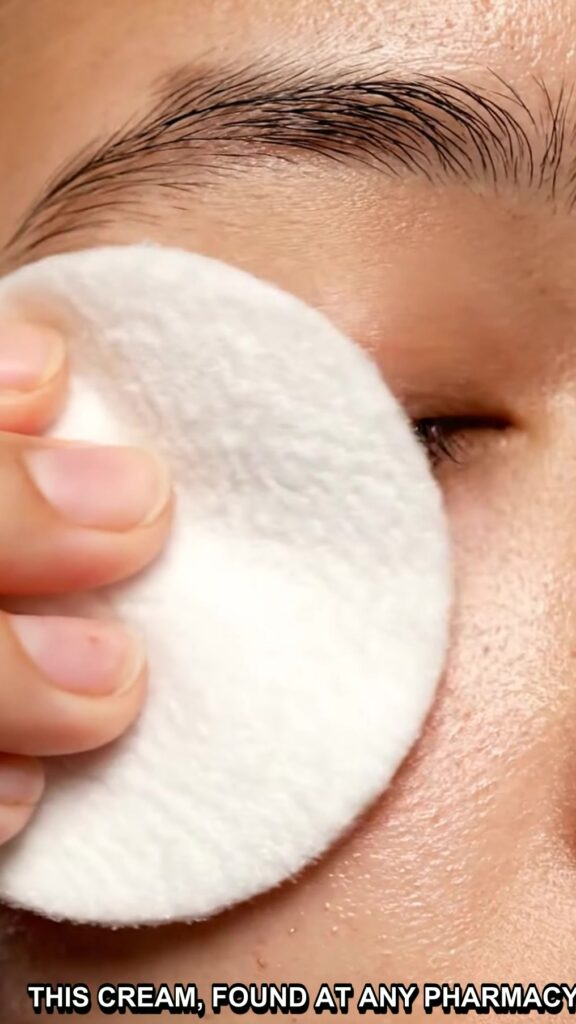
She dabbed a small amount onto her fingertips and smoothed it across her cheeks and forehead, careful around her eyes. The sensation was cool at first, then warming, as if the product was waking up. She watched her reflection like a witness in court, waiting for evidence.
Nothing happened. Of course nothing happened. She felt foolish, like a child leaving a tooth under the pillow and expecting magic to pay her back.
Still, when she climbed into bed, she realized her skin felt strangely calm, as if someone had laid a quiet hand over her face and told it to stop trembling. She slept in pieces, but she slept.
By morning, she noticed the first change—small enough to dismiss, but sharp enough to catch the eye. The pale spot on her cheek looked lighter, less certain of itself. The lines by her eyes didn’t vanish, but they softened, as if their edges had been rubbed gently with an eraser.
Mara leaned closer to the mirror. The cream hadn’t made her young. It had made her look like she’d had a full night’s rest, like her body had been granted a moment of mercy. Her phone buzzed with condolence messages, and for the first time in a week she didn’t flinch at the idea of being seen.
She used the cream again that evening, and the next. Each time, the same warming bloom spread beneath her skin. Each time, the changes accumulated: a fading of sun spots she hadn’t realized were there, a smoothing of texture, a quieting of redness. In the grocery store, a woman she barely knew tilted her head and said, “You look… brighter. Are you okay?”
Mara smiled on instinct, then felt the smile crumble. She wasn’t okay. But she looked like someone who might be, and that illusion gave her a strange, guilty relief.
On the fourth night, she sat at her kitchen table with the jar open in front of her like a confession. The cream was less than half full. She hadn’t been using too much. Not really. Yet it seemed to disappear faster than it should, as if it were being consumed by something hungrier than skin.
She remembered the clerk’s warning. Don’t use too much. Follow the directions. The words returned with a different weight, like a rope thrown across a gap.
Mara stood and carried the jar back to the bathroom. Under the vanity light, she studied the label again. The fine print was dense, but one line snagged her attention: MAY CAUSE TEMPORARY TIGHTENING. In rare cases, DISCONTINUE USE IF IRRITATION OCCURS.
Temporary tightening. She flexed her jaw and realized, with a chill, that her smile had felt slightly stiff earlier, as if her face were learning a new shape and resisting it.
That night, she dreamed of her mother’s hands, not cold and still as they’d been at the viewing, but warm and busy—buttoning a blouse, smoothing Mara’s hair, pressing gentle fingertips to her cheeks. In the dream, her mother looked at her with fierce tenderness and said, “Don’t try to erase it. Don’t try to erase me.”
Mara woke with tears on her face and the dawn climbing the blinds. She went to the mirror. Her skin looked luminous, almost unreal, as if it had been edited. The lines were faint, the spots nearly gone. But her eyes—her eyes looked hollowed by the effort of pretending nothing had happened.
In the cabinet, behind toothpaste and cotton swabs, she found the old tin of her mother’s hand cream, the one that smelled of lavender and time. Mara had kept it without thinking, a relic she couldn’t throw away. She opened it and inhaled. The scent was ordinary, imperfect, human. It didn’t promise anything. It simply existed.
Mara looked at the drugstore jar again. The miracle it offered was neat and fast and shallow. It could smooth the surface. It could lighten the marks. But it couldn’t undo the night phone calls, the hospital bracelets, the final sigh. It couldn’t give back a voice that used to call her name.
She screwed the lid on tightly, then placed the jar in the back of the cabinet, not discarded, not worshipped—just put away. She washed her face slowly, as if washing could be a kind of prayer, and then she rubbed a small amount of her mother’s lavender cream into her hands.
When she left the bathroom, her skin still glowed faintly, but the glow no longer felt like a promise. It felt like a reminder: that she was still here, still moving through days that hurt, still capable of softness.
Outside, the town’s morning traffic began. Mara took the funeral program from her table and unfolded it carefully. She traced her mother’s face, the smile caught in print. The wrinkles that would have come—lines of laughter, of worry, of love—had been stolen by the suddenness of loss. Mara realized, with a sudden, fierce clarity, that erasing time wasn’t the same as honoring it.
She picked up her phone and typed a message to the clerk at Larkin’s Pharmacy, though she didn’t know his name and doubted the store had a number for him specifically. The message wasn’t about the cream. It was about the word he’d used—second chance—and how sometimes, what you needed wasn’t to look untouched, but to feel held.
Mara deleted the draft. Some things didn’t need to be sent to be true. She stepped out into the day, her face bare of miracles, carrying her grief like a visible mark she no longer wanted to hide. The world would see her as she was—creased by sorrow, brightened by endurance—and for the first time since the hospital, she let that be enough.