A Simple Vaseline and Fine Salt Routine for Smoother, Better-Hydrated Skin After 40
You finish a shower, catch your reflection, and spot a familiar change many people notice after 40: skin that seems drier and less supple, with rougher texture around the elbows, knees, and along the jawline. Store aisles are packed with body lotions and “firming” creams that promise dramatic results—yet the payoff often feels modest while the price keeps climbing.
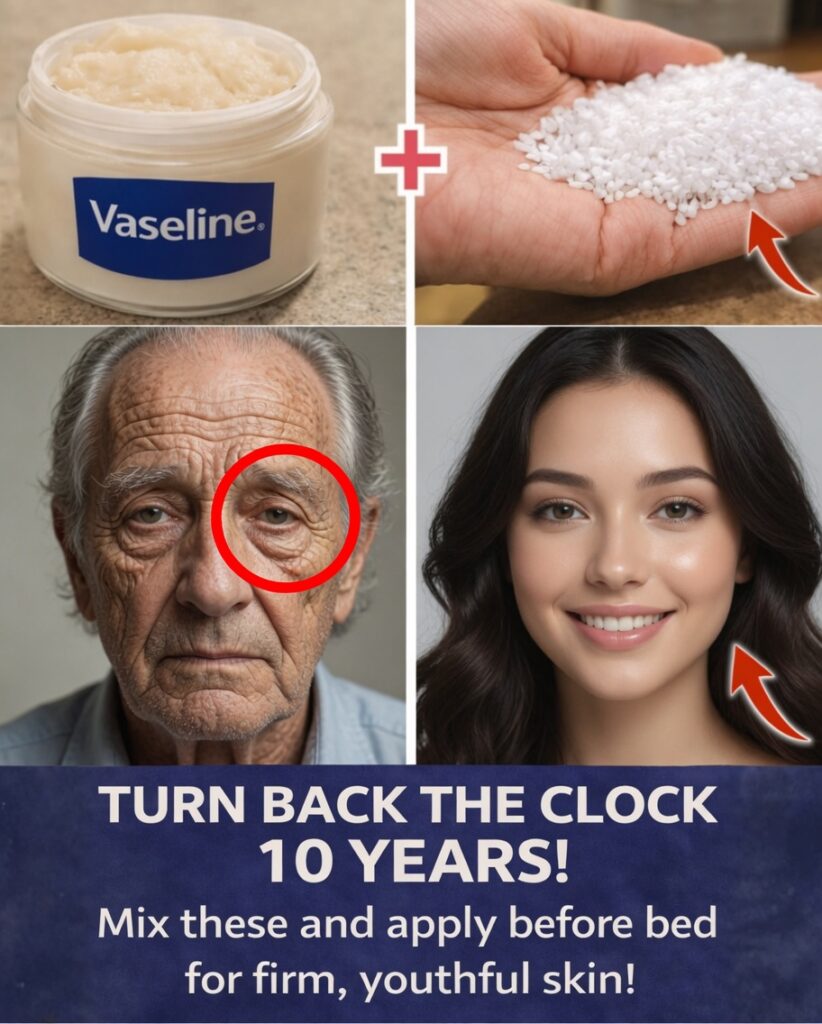
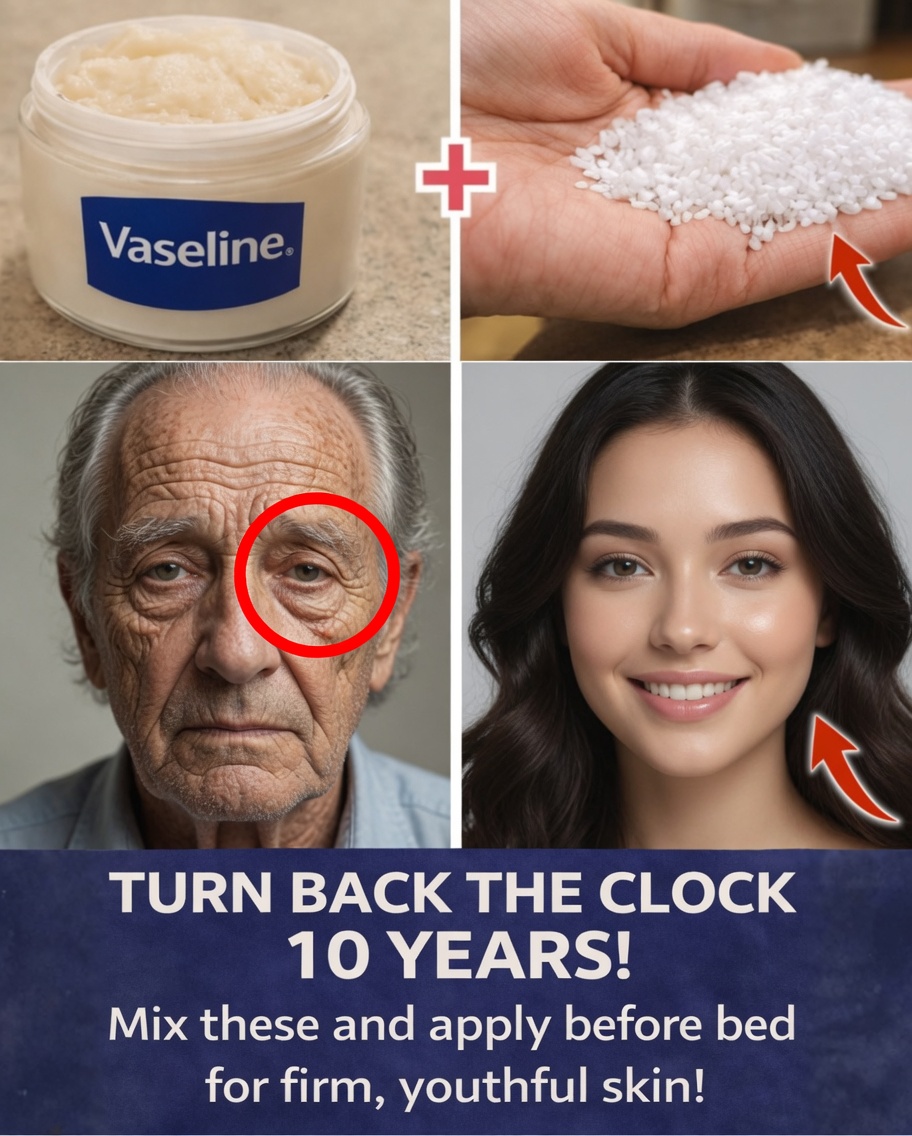
A surprisingly basic, low-cost pairing has been making the rounds again in skincare conversations: petroleum jelly (Vaseline or any generic equivalent) + fine salt. Used thoughtfully, this duo can support softer texture and stronger hydration by combining gentle exfoliation with serious moisture sealing. Here’s why it’s trending again and how people are using it.
Why Vaseline + Salt Can Be Especially Helpful for Mature Skin
Aging skin changes in predictable ways:
- Collagen and elastin gradually weaken, reducing that “bounce.”
- Cell turnover slows, so dull, dead surface cells build up more easily.
- Natural oil production decreases, making dryness more persistent—especially on shins, hands, elbows, and knees.
Most moisturizers add hydration, but they may not do much to remove rough buildup. This method works differently because it combines:
- Fine salt for mild physical exfoliation (to lift dull surface cells)
- Petroleum jelly for strong occlusion (to reduce water loss and lock in moisture)
Dermatology research consistently supports petroleum jelly as an effective occlusive that helps reduce transepidermal water loss—often outperforming many plant oils in this specific role. Meanwhile, fine-grain salt functions like a simple spa scrub: it can smooth texture without relying on acids or complex formulas (as long as the grains are small and pressure is light).
No, this isn’t a proven “firming treatment” in the clinical sense. But by improving hydration and surface smoothness, it may help skin look and feel more comfortable, softer, and less textured—two big priorities for mature skin.
What Regular Users Commonly Notice (After 3–5 Nights Weekly)
People who follow this routine consistently for several weeks often describe similar results, especially on stubborn dry areas:
-
Instantly smoother feel after rinsing
Fine salt lightly buffs away dead cells, making elbows, knees, heels, and upper arms feel softer right away. -
Stronger overnight moisture retention
Petroleum jelly forms a seal that helps slow moisture evaporation, so skin often feels more hydrated by morning—especially on shins, hands, and feet. -
A temporary “snug” sensation
After rinsing, well-hydrated skin can look and feel slightly tighter for a few hours, commonly around the neck, jawline, and arms. -
Steadier improvement in overall softness
With repeated gentle exfoliation plus barrier support, areas that look crepey or rough (inner arms, above knees, stomach) may appear more refined over 4–8 weeks. -
Noticeable relief for tough, dry patches
Knees, elbows, and heels often respond well as salt clears buildup and petroleum jelly helps reduce flaking and “ashy” texture. -
Smoother-looking bumps on body skin
Some users with keratosis pilaris-like texture on arms or thighs report a more even look as exfoliation clears surface buildup and occlusion softens the area. -
Brighter, more even-looking tone
Removing dull surface cells can reveal fresher skin underneath, while added hydration may make fine lines and uneven texture less noticeable. -
Excellent cost-to-results ratio
A jar of petroleum jelly and a container of fine salt typically cost just a few dollars and last a long time. -
A quick, satisfying self-care ritual
Because results can feel immediate (softness) and gradual (texture refinement), many find it easier to stay consistent.
Vaseline + Salt Compared With Other Popular Smoothing Methods
If you’re choosing between body-smoothing options, this is how the Vaseline and salt scrub approach is often described:
- Vaseline + fine salt: physical exfoliation + very strong occlusion; low cost; quick routine; noticeable softness with repeated use
- Coffee + coconut oil scrubs: physical exfoliation + moderate occlusion; can feel pleasant but may be messy and less sealing than petroleum jelly
- Dry brushing + lotion: exfoliation support but low occlusion; depends heavily on the moisturizer used afterward
- Drugstore “firming” creams: often focus on hydration and temporary tightening; usually minimal exfoliation unless formulated with acids
- Luxury wraps/treatments: can look impressive short-term, but are expensive and typically temporary
What makes this method stand out is its simplicity, dual action (exfoliate + seal), and affordability.
How to Use the Vaseline + Salt Routine Safely (Step by Step)
What you’ll need
- Petroleum jelly (Vaseline or generic)
- Fine salt: fine sea salt, table salt, or finely ground Himalayan salt
- Avoid coarse grains, which can scratch or irritate skin
- Optional: 2–3 drops of a gentle essential oil (for scent only; skip if sensitive)
Instructions
- Shower or bathe with warm (not hot) water to soften skin.
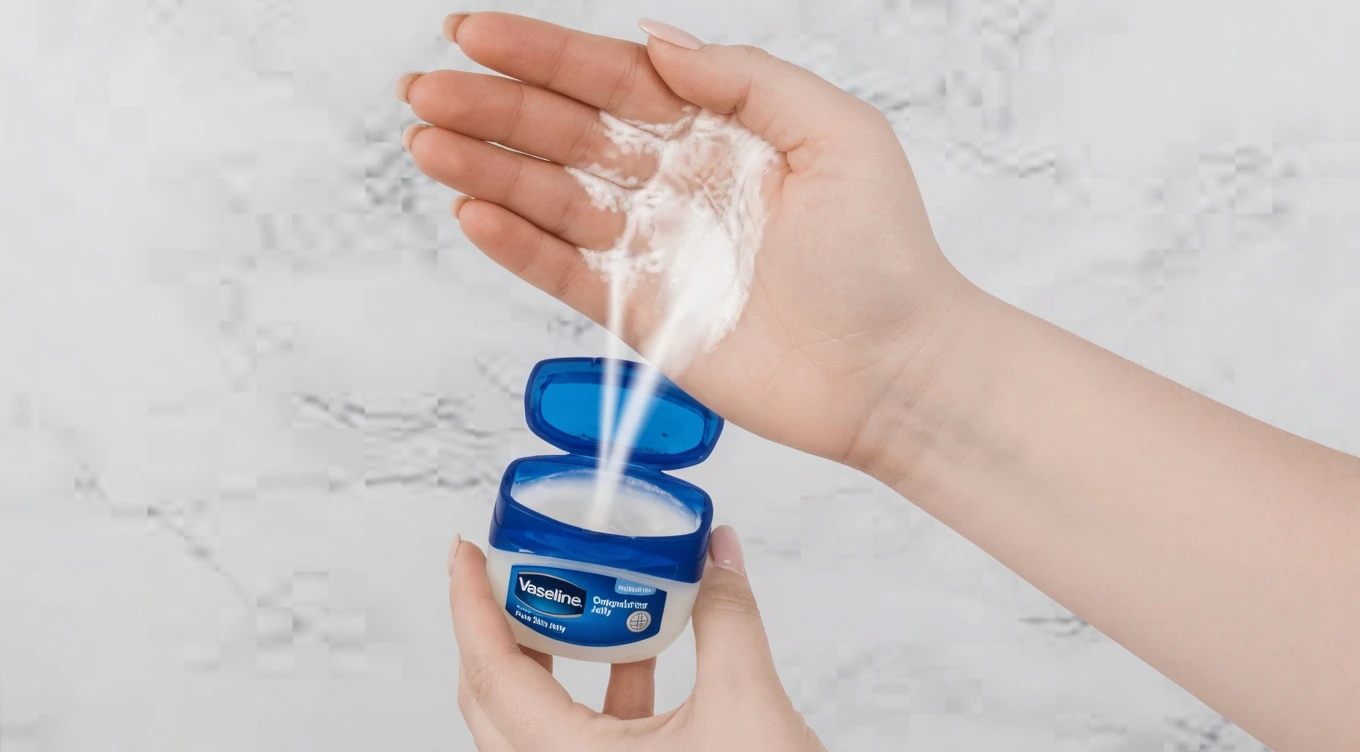
- While skin is still damp, combine:
- 1–2 teaspoons fine salt
- 1–2 tablespoons petroleum jelly
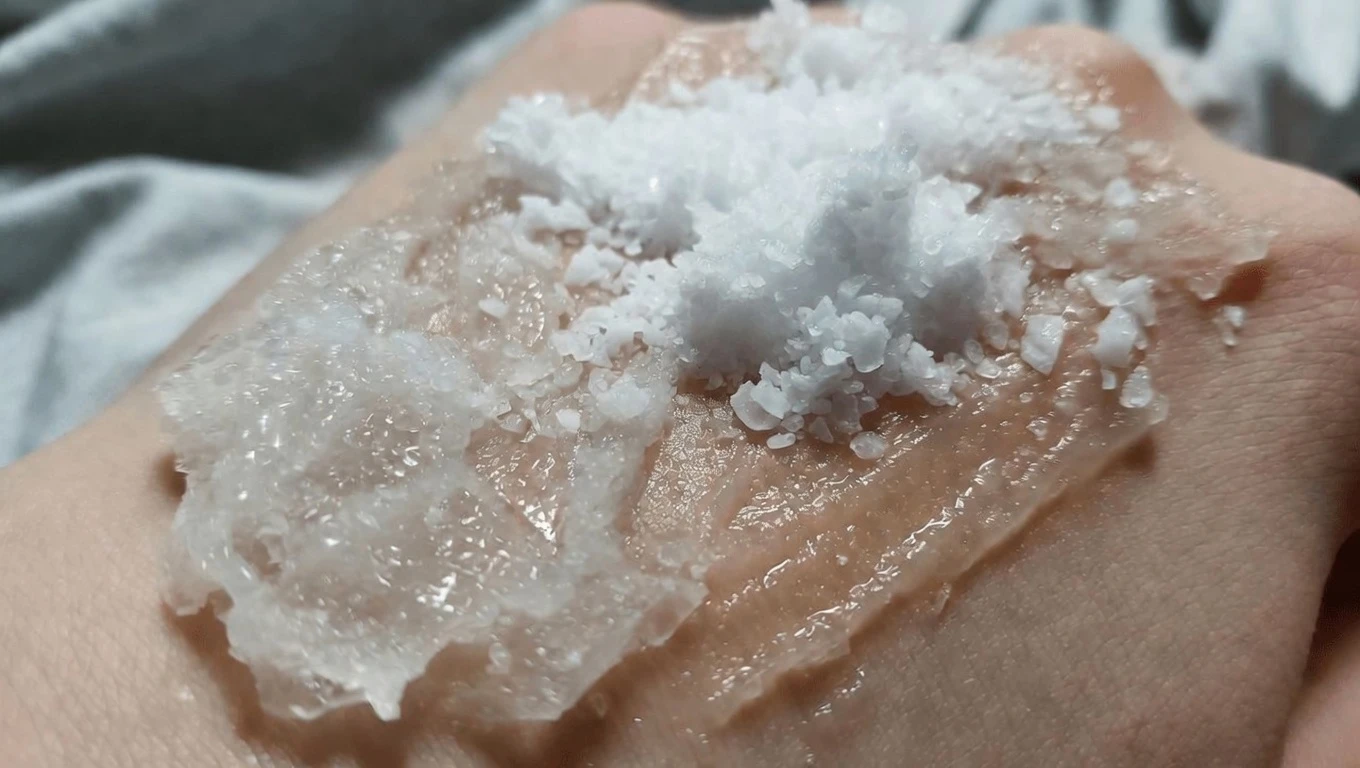
Mix in your palm into a lightly gritty paste.
- Massage gently in upward circular motions over target areas (arms, legs, stomach, neck, jawline) for 60–90 seconds per area. Keep pressure light.
- Leave a thin layer on for 10–20 minutes.
- For very dry spots (heels, elbows), some people leave it overnight and cover with old socks or clothing.
- Rinse with warm water (soap isn’t necessary) and pat dry.
- If skin feels overly tight afterward, apply a light everyday moisturizer.
How often to do it
- 3–5 nights per week
- Take 1–2 rest nights to avoid over-exfoliating
- Many notice smoother skin in week 1, with more visible texture improvement over weeks 3–8
Quick Safety Guidelines
- Patch test on the inner arm for 24 hours if you’re sensitive.
- Avoid use on open cuts, sunburn, active eczema flare-ups, or irritated skin.
- Be extra cautious around the face: if used at all, limit to jawline/neck with very fine salt and minimal pressure.
- If you use retinoids, exfoliating acids, or prescription topicals, alternate nights or ask a professional for guidance.
- Stop if redness, burning, or stinging lasts longer than about an hour.
Want to Try It Tonight?
If you already have petroleum jelly and fine salt at home, the routine takes about 10–15 minutes. Many people judge it by one simple test: how their skin feels the next morning. With steady use over a month, some find it becomes a favorite part of their evening wind-down.
FAQ
Is Vaseline and salt safe for every skin type?
Many people tolerate it well, but anyone with very sensitive skin, broken/irritated skin, or frequent rashes should patch test first or consult a dermatologist. Petroleum jelly is generally considered non-comedogenic, but it can feel heavy—especially for oily or acne-prone individuals.
How quickly will I notice softer skin?
The exfoliation can create a smoother feel after the first use. Deeper hydration and more refined texture typically build over 1–4 weeks with consistent application.
Can I use this on my face?
It’s best to avoid most facial areas. If you choose to try it, restrict to jawline and neck only, use very fine salt, and keep pressure extremely gentle to reduce the risk of irritation.
Disclaimer: This article is for informational purposes only and does not replace medical advice. Speak with a dermatologist or healthcare professional before starting a new skincare routine, especially if you have diagnosed skin conditions, sensitivities, or use prescription treatments.