
Garlic and Digestion: 8 Common Pairings That Can Trigger Discomfort (and How to Fix Them)
Garlic is a global kitchen staple for a reason. Its rich, savory bite can elevate everyday dishes, and many people also appreciate it for general wellness support. Still, not everyone feels great after eating it—especially when garlic is combined with certain foods or drinks. For sensitive stomachs, garlic-heavy meals can sometimes lead to bloating, gas, mild heartburn, or a “heavy” sensation that lingers.
The encouraging part: these reactions are usually mild, short-lived, and often avoidable once you know which garlic combinations are most likely to cause trouble. Below are eight common pairings that may trigger digestive discomfort, plus simple adjustments so you can keep enjoying garlic without the unpleasant aftermath.

Why Garlic Can Sometimes Upset Your Stomach
Garlic’s signature smell and flavor come largely from sulfur-based compounds. The most well-known is allicin, which forms when garlic is chopped, crushed, or chewed. These compounds are part of what makes garlic so valued in cooking and traditional wellness routines.
However, those same sulfur compounds can be irritating for some people—particularly when garlic is raw, eaten in large amounts, or combined with foods and beverages that increase acidity or slow digestion. Many people also find that raw garlic is harder on the stomach than cooked garlic, which tends to be gentler.
8 Garlic Combinations That May Cause Digestive Discomfort
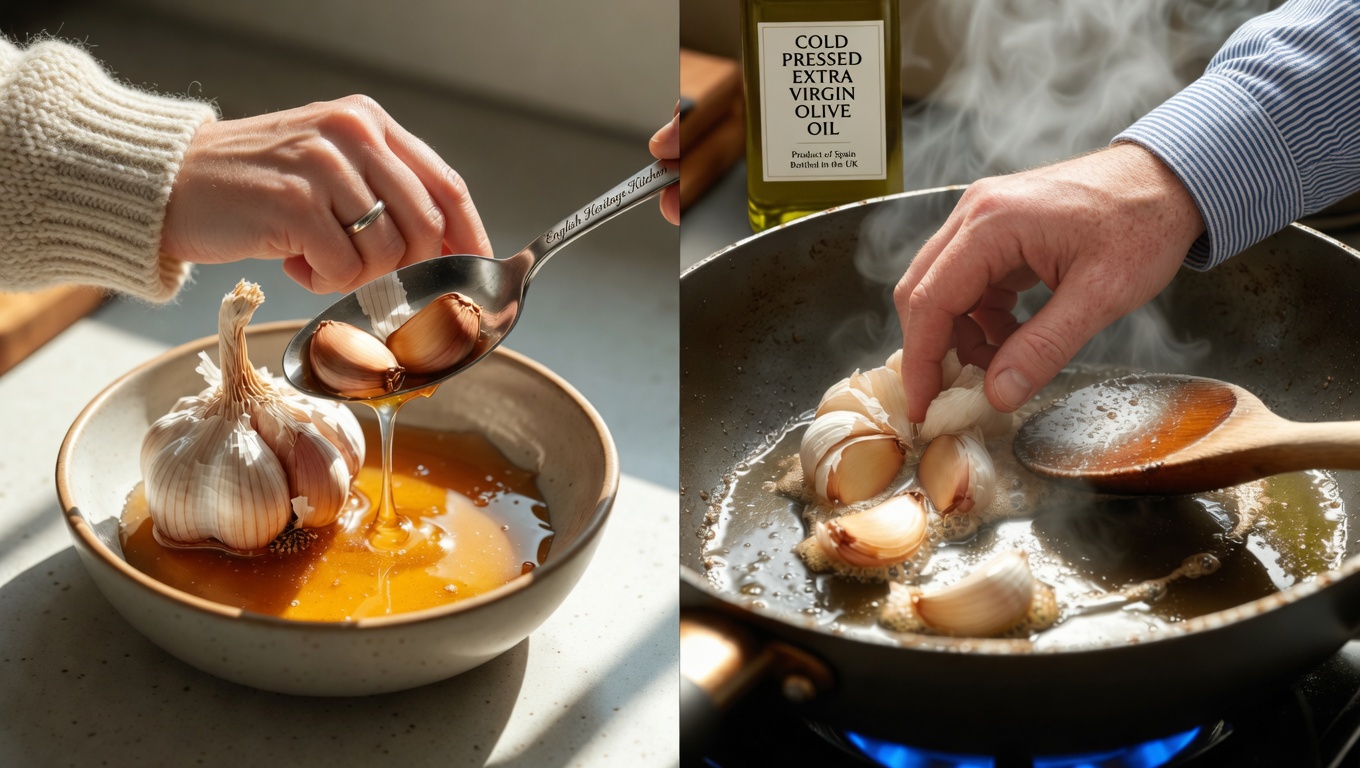
1. Large Amounts of Raw Garlic Mixed with Honey
A raw garlic-and-honey mixture is a popular home remedy, especially during cold and flu season. While small amounts are often well tolerated, a big spoonful—especially on an empty stomach—can sometimes trigger stomach irritation, mild nausea, or lightheadedness in sensitive individuals.
Because both garlic and honey are sometimes associated with blood-thinning effects, very high amounts may feel more intense for certain people.
Quick adjustment
- Use a smaller portion (around 1/2 to 1 small clove).
- Take it with food or after a meal, not first thing in the morning.
2. Raw Fish Dishes with Fresh Garlic (Sushi, Ceviche, etc.)
Fresh minced garlic can add a sharp, bold edge to raw seafood. But for some people, combining raw garlic with raw fish may feel heavy on digestion, leading to nausea, bloating, or general stomach unease shortly afterward.
Quick adjustment
- Keep garlic minimal, or choose lightly cooked alternatives when possible.
3. Garlic-Heavy Meals Paired with Alcohol
Garlic pasta, stir-fries, and roasted garlic dishes often go hand-in-hand with wine, beer, or cocktails. Yet alcohol and garlic can be a rough pairing for some stomachs, since both may irritate the digestive tract and increase the chance of indigestion or burning sensations.
Quick adjustment
- Choose water or herbal tea with garlicky meals.
- If you drink alcohol, keep it very moderate.
4. Strong Garlic with Dairy (Milk, Cream, Cheese)
Cheesy garlic bread, creamy garlic sauces, or drinking milk after a garlicky meal can cause extra bloating or gas for some people. In certain individuals, digestion may feel heavier when garlic compounds and dairy proteins are processed together.
Quick adjustment
- Reduce the dairy portion in garlic-rich dishes.
- Consider plant-based alternatives if dairy tends to trigger symptoms.
5. High Amounts of Garlic and Onions in the Same Dish
Garlic and onions are both alliums and share similar sulfur compounds. When you pile on both—think onion-garlic loaded salsa, soups, or stir-fries—some people experience noticeably more gas, bloating, or heartburn.
Quick adjustment
- Let either garlic or onion be the main flavor driver, rather than using large quantities of both together.
6. Garlic Followed Immediately by Coffee
Many people finish a garlicky lunch or dinner and then reach for coffee. For sensitive stomachs, garlic plus coffee’s acidity can prolong discomfort or make reflux more noticeable.
Quick adjustment
- Wait 60–90 minutes after a garlic-heavy meal before drinking coffee.
7. Garlic with Very Sweet, High-Sugar Fruits (Watermelon, Lychee, Tropical Fruits)
Some people report digestive upset—such as bloating, mild indigestion, or even a headache—when eating strong garlic close to very sweet fruits. Scientific evidence is limited here, but personal sensitivity patterns do exist.
Quick adjustment
- If you notice a consistent reaction, eat these fruits separately from garlic-rich meals.
8. High-Dose Garlic Supplements Combined with Certain Medications
Concentrated garlic supplements can interact with some medications, including:
- Blood thinners (such as warfarin)
- Certain diabetes medications
- Some blood pressure drugs
This is often linked to garlic’s natural effects related to platelet function and blood sugar regulation.
Important reminder
- Talk to your doctor or pharmacist before using garlic supplements if you take any ongoing medication.
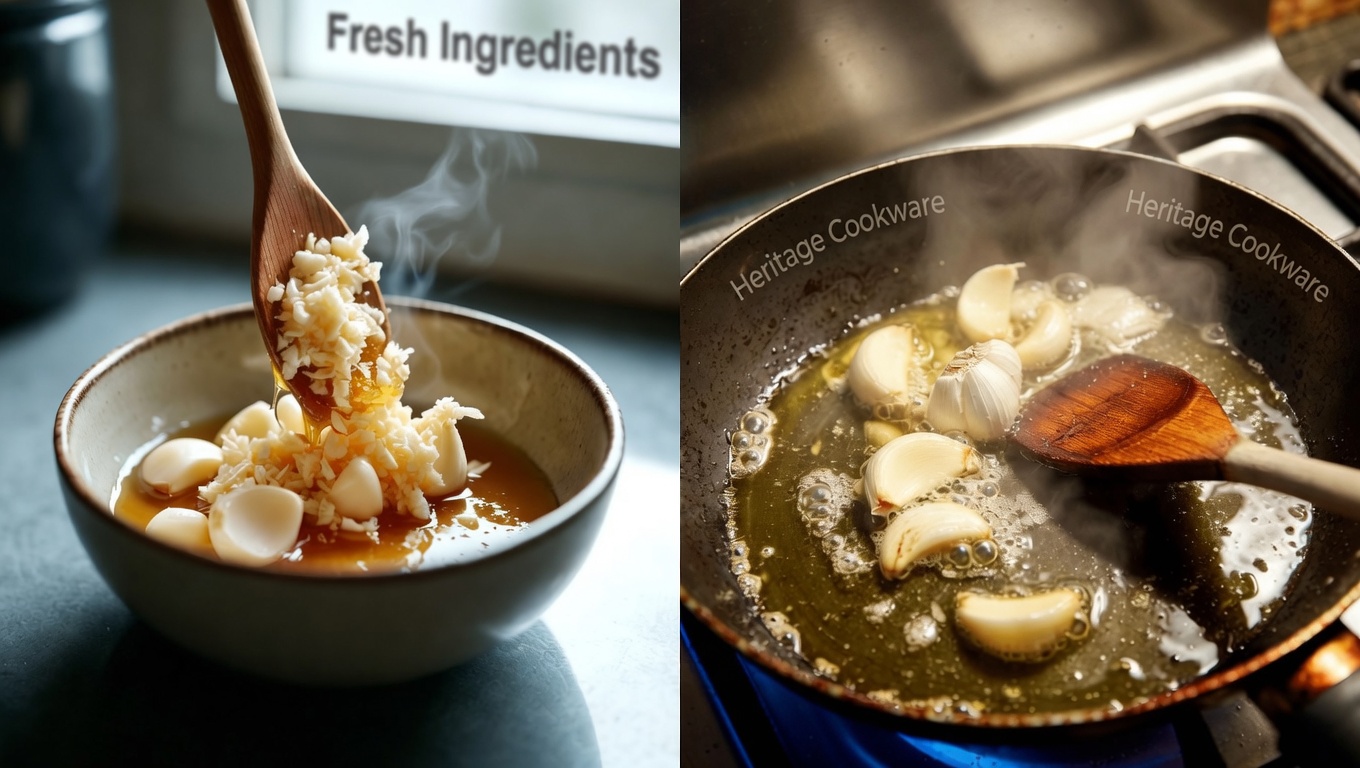
Raw vs. Cooked Garlic: A Quick Comparison
Raw Garlic
- Stronger taste, higher allicin levels
- More likely to trigger gas, bloating, or heartburn
- Often used in small “medicinal” amounts
Cooked Garlic
- Milder flavor and reduced sulfur intensity
- Typically gentler on the stomach
- Ideal for everyday cooking
Many people who struggle with raw garlic find that cooked garlic causes little to no discomfort.
5 Practical Ways to Enjoy Garlic More Comfortably
Try these easy, stomach-friendly habits:
- Start small: Begin with about 1 small clove per day and increase gradually based on your body’s response.
- Cook it first: Lightly sauté minced garlic in olive oil for 1–2 minutes to reduce irritation for many people.
- Build a balanced meal: Combine garlic with fiber-rich vegetables, whole grains, or legumes to support smoother digestion.
- Stay hydrated: Drink water during and after the meal to help your system handle strong flavors.
- Give your stomach time: Avoid coffee, alcohol, or heavy dairy immediately after garlic-rich dishes—spacing these out often makes a big difference.
Final Thoughts
Garlic is one of the most versatile ingredients in home cooking, and most people don’t need to eliminate it completely. By identifying garlic combinations that can trigger mild digestive discomfort—and making a few simple adjustments—you can often enjoy garlic’s flavor (and its potential wellness benefits) without second-guessing every meal.
The most reliable approach comes down to moderation, cooking method, and paying attention to your own tolerance. Over time, most people quickly learn which garlic pairings work best for their body.